
Last updated September 20, 2026
Full 25-point door and opener safety check with every visit - springs, cables, rollers, tracks, and your LiftMaster or Chamberlain opener included
You get a price before we start. It does not change when the truck arrives.
 Before
 After
After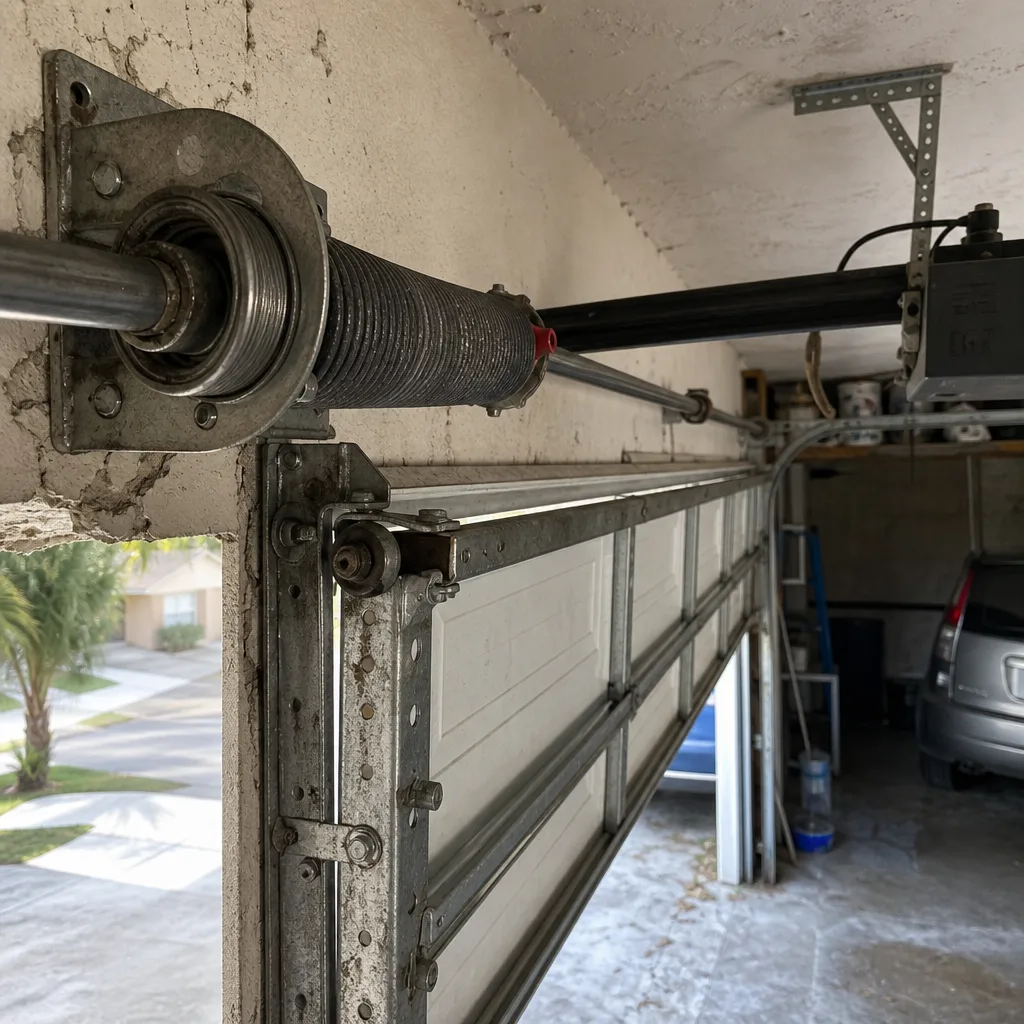 Before
 After
After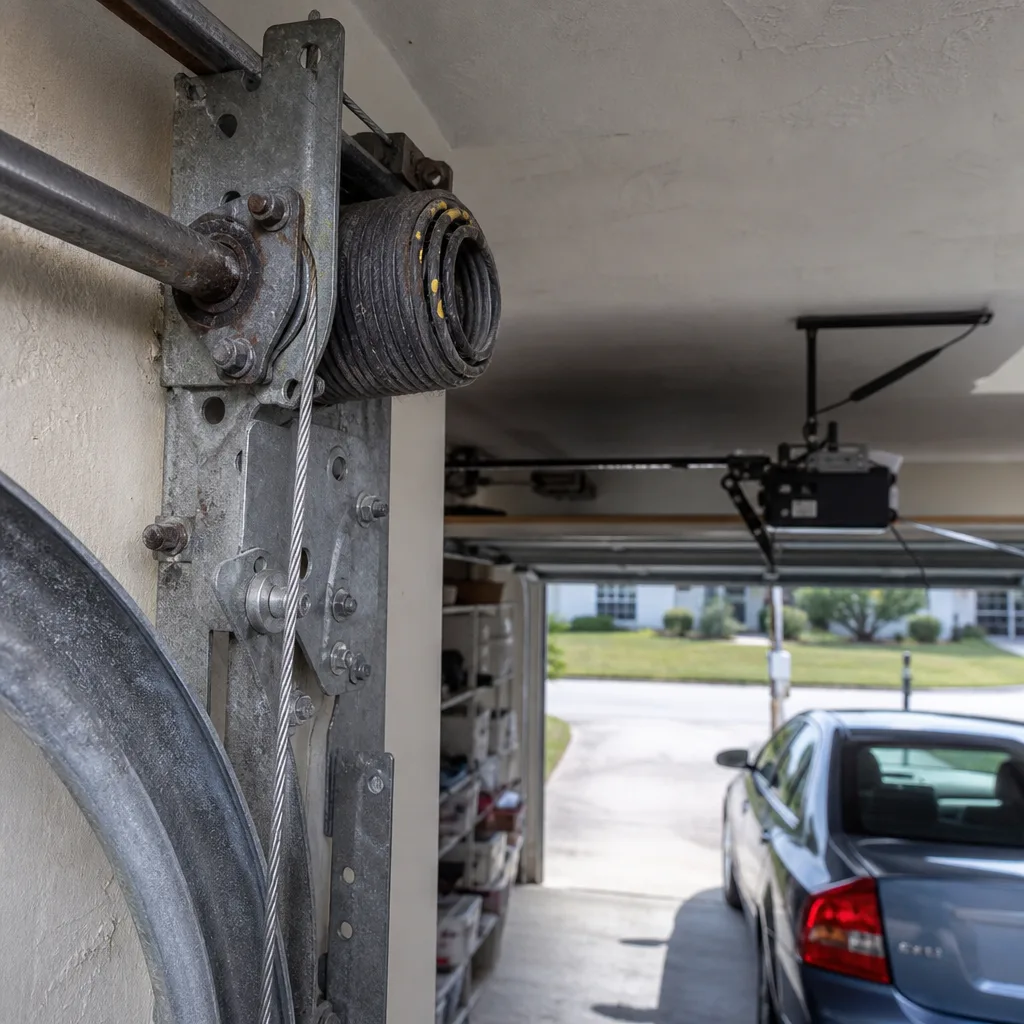 Before
 After
AfterSeasonal Garage Door Care for Boynton Beach: Year-Round Homeowner’s Guide
April in Boynton Beach is not spring maintenance. It is pre-hurricane preparation, and the checklist is specific: wind-load hardware inspection, bottom seal integrity, and bracket bolt torque. A technician who hands you a “spring tune-up” in April is reading from the wrong script. Boynton Beach doesn’t have four seasons. It has a wet season, a dry season, a hurricane window, and a salt-air constant that operates year-round. This guide rebuilds the seasonal care schedule around what the environment actually does to a garage door in South Florida, so you can plan the right task in the right month and skip the calendar rituals that were written for houses in Ohio. For The Complete Guide to Garage Door in Boynton Beach, see our full resource.
Quick Answer
Seasonal garage door care in Boynton Beach means a four-part annual rhythm: a pre-hurricane hardware check in April and May, a wet-season seal and lubrication discipline from June through September, a salt and corrosion assessment in October and November, and a dry-season UV and clearance inspection from December through March. Most homeowners can handle the visual checks and basic lubrication with household tools, though DIY vs Professional Garage Door: The Boynton Beach Homeowner’s Decision Guide can help you decide when to call in a pro. Torsion spring tension and cable drum adjustment require a licensed technician, full stop.
Table of Contents
- Why Boynton Beach Is Different From Every Seasonal Guide You’ve Read
- Pre-Hurricane Season (April-May): The Wind-Load Checklist
- Wet Season (June-September): Moisture, Lubrication, and Daily Cycling
- Post-Rainy-Season Assessment (October-November): Salt and Rust Intrusion
- Dry Season (December-March): UV Degradation and Thermal Clearance
- How to Document Each Seasonal Check So the Next Technician Has a Baseline
- Which Tasks You Can Do Yourself and Which Require a Licensed Technician
- Common Mistakes to Avoid
- When to Call a Professional
- Frequently Asked Questions
- The Bottom Line
BeforeAfterWhy Boynton Beach Is Different From Every Seasonal Guide You’ve Read
Most seasonal garage door advice is written for a four-season climate: freeze-thaw cycles, winter lubrication, spring rust repair, fall weatherstripping. Boynton Beach has none of that. The average low in January is 57 degrees. The garage door never freezes to the slab, and you will never need to chip ice off the bottom seal. What you get instead is a combination no northern guide addresses: persistent salt aerosol from the Atlantic, roughly 60 inches of rain concentrated in six months, UV indices that stay above 8 for most of the year, and a defined Atlantic hurricane season from June 1 through November 30. Each of those forces attacks a specific component. Salt attacks the torsion spring’s surface finish and the exposed hardware on the track brackets. Rain attacks the bottom seal, the weatherstripping, and anything made of bare steel. UV attacks the vinyl trim, the weatherstripping, and painted steel panels. Wind loading, when a storm passes close, tests every lag bolt anchoring the track to the framing. A seasonal plan built around those four forces is the only one that matches what a Boynton Beach garage door actually goes through.
We work on garage doors across Boynton Beach, from the homes along Federal Highway to the newer developments west of the Turnpike. The failure patterns are consistent. The door that fails in September usually showed the first signs in May. The spring that snaps in February often had visible surface corrosion the previous October. The point of a seasonal schedule is not to perform ritual maintenance. It is to catch the evidence early, photograph it, and act before a $40 part failure turns into a $700 repair.
Pre-Hurricane Season (April-May): The Wind-Load Checklist
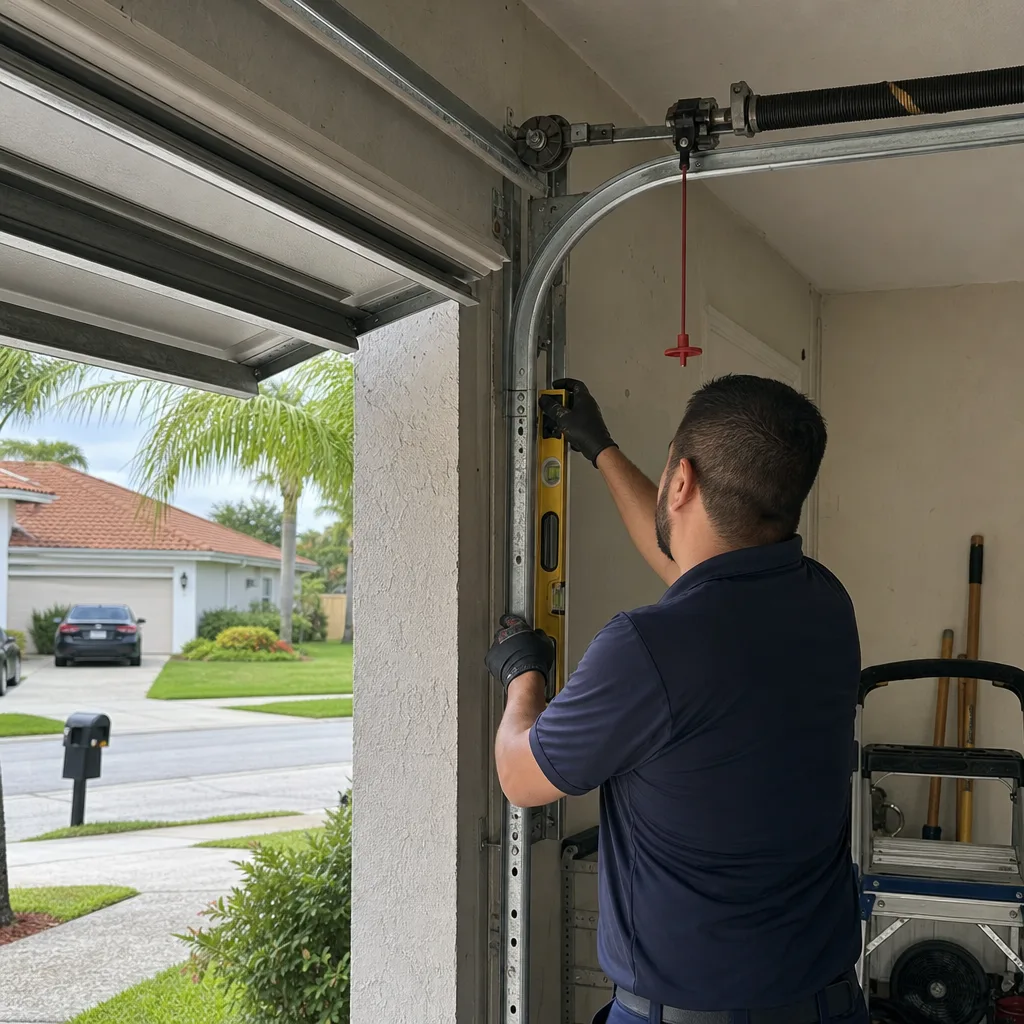
The single most important seasonal task in Boynton Beach happens in April and May, before the first named storm forms. A garage door is the largest opening on the face of the house. When a hurricane pushes wind against it, the entire door surface acts like a sail, and the load transfers through the horizontal track brackets into the wall framing. If those brackets are loose, the track flexes. If the lag bolts have stripped out of the wood, the track pulls away. If the center support bearing is worn, the torsion shaft oscillates under load. None of these failures announce themselves during normal operation. You find them by inspection, or a storm finds them for you.
Here is the checklist we recommend every homeowner in Boynton Beach walk through in April or early May:
- Inspect every horizontal track bracket. There are typically four to six brackets per side, each fastened with lag bolts into the wall studs or header. Place a hand on each bracket and push sideways with moderate force. Movement of more than an eighth of an inch means the lag bolt has loosened or stripped. Tighten loose bolts with a socket wrench. If the bolt spins without resistance, the hole is stripped and needs a larger lag or a repair plate. Do not ignore it and hope the other brackets hold.
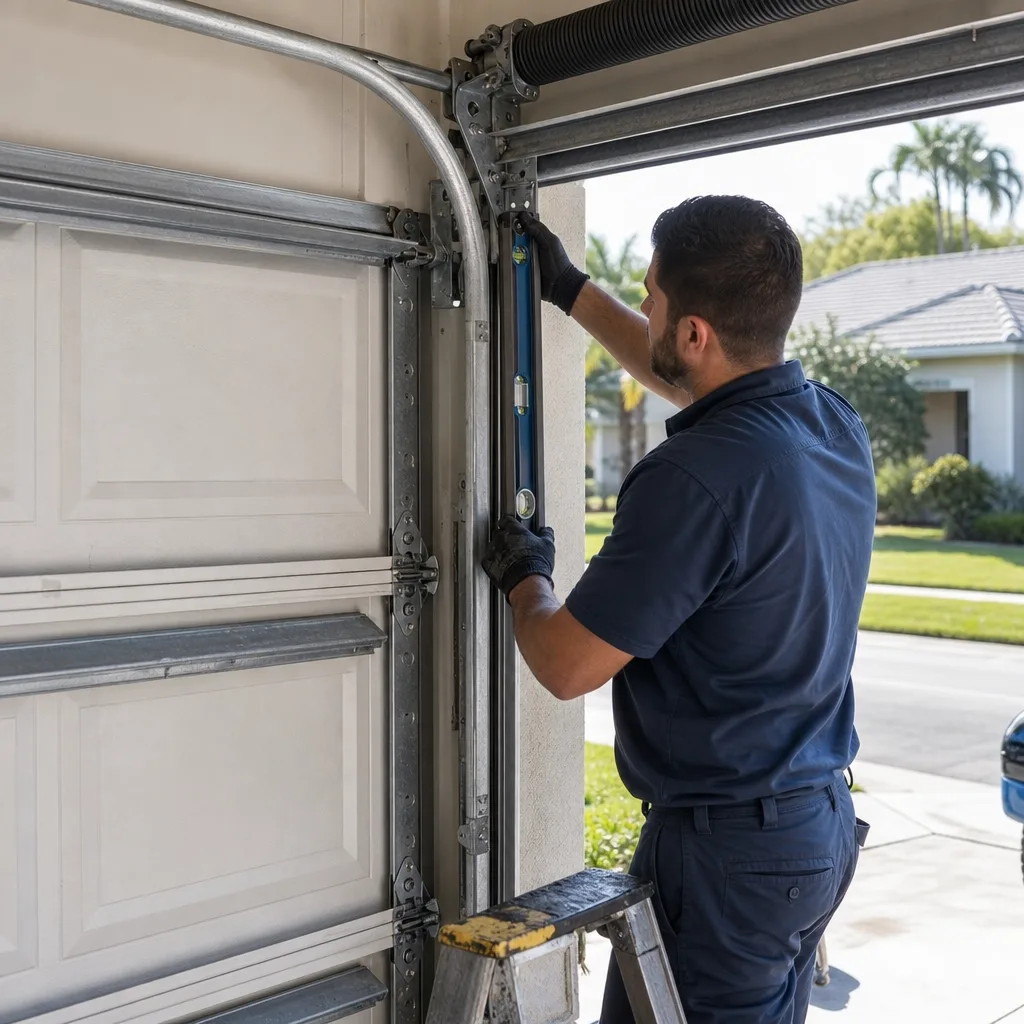
- Check the vertical track alignment. Stand at the rear of the garage and sight down each vertical track. The gap between the track and the door edge should be consistent from floor to lintel. A track that bows inward or outward by more than a quarter inch indicates a bracket or track problem. The most common cause we see in Boynton Beach is a bolt that backed out during months of thermal expansion and contraction.
- Torque-check the lag bolts on the opener rail and the center support bearing plate. These are the mounting points that carry the most vibration. Use a torque wrench if you have one; a standard socket wrench with firm hand pressure is adequate for a tightness check. A lag bolt that turns easily is already loose enough to matter.
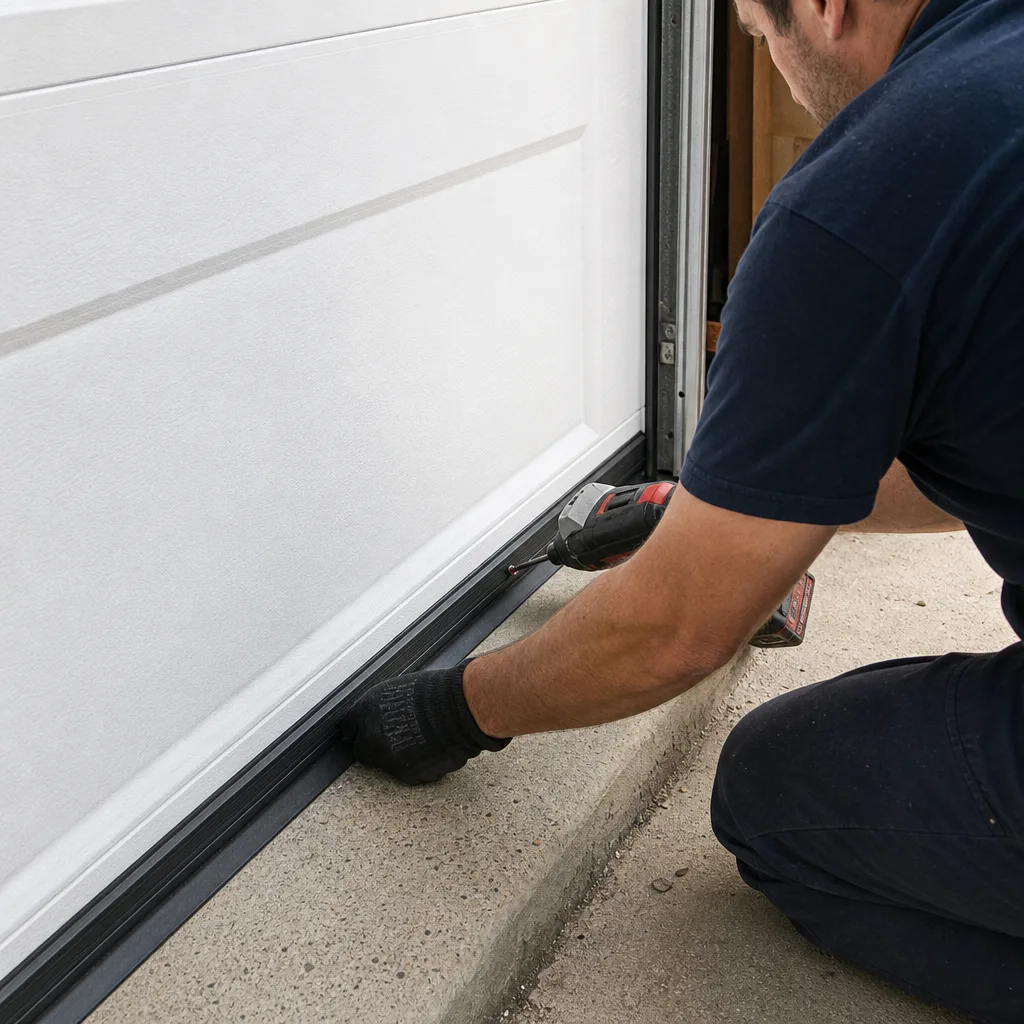
- Examine the bottom seal for gaps and tears. The bottom seal, also called the astragal or U-shaped rubber strip along the bottom edge, is what prevents wind-driven rain and debris from entering the garage. Run a hand along its full length. Look for cracks, separations from the aluminum retainer, or visible daylight beneath the door when closed. A split seal during a hurricane lets water in at pressure, and that water travels across the garage floor into whatever is stored there.
- Test the emergency release. Pull the red release cord with the door closed. The door should disengage from the opener carriage and remain in place without creeping down. If it drifts downward, the springs are not balanced, which becomes a structural problem under wind load. Re-engage the opener by running it until the carriage reconnects.
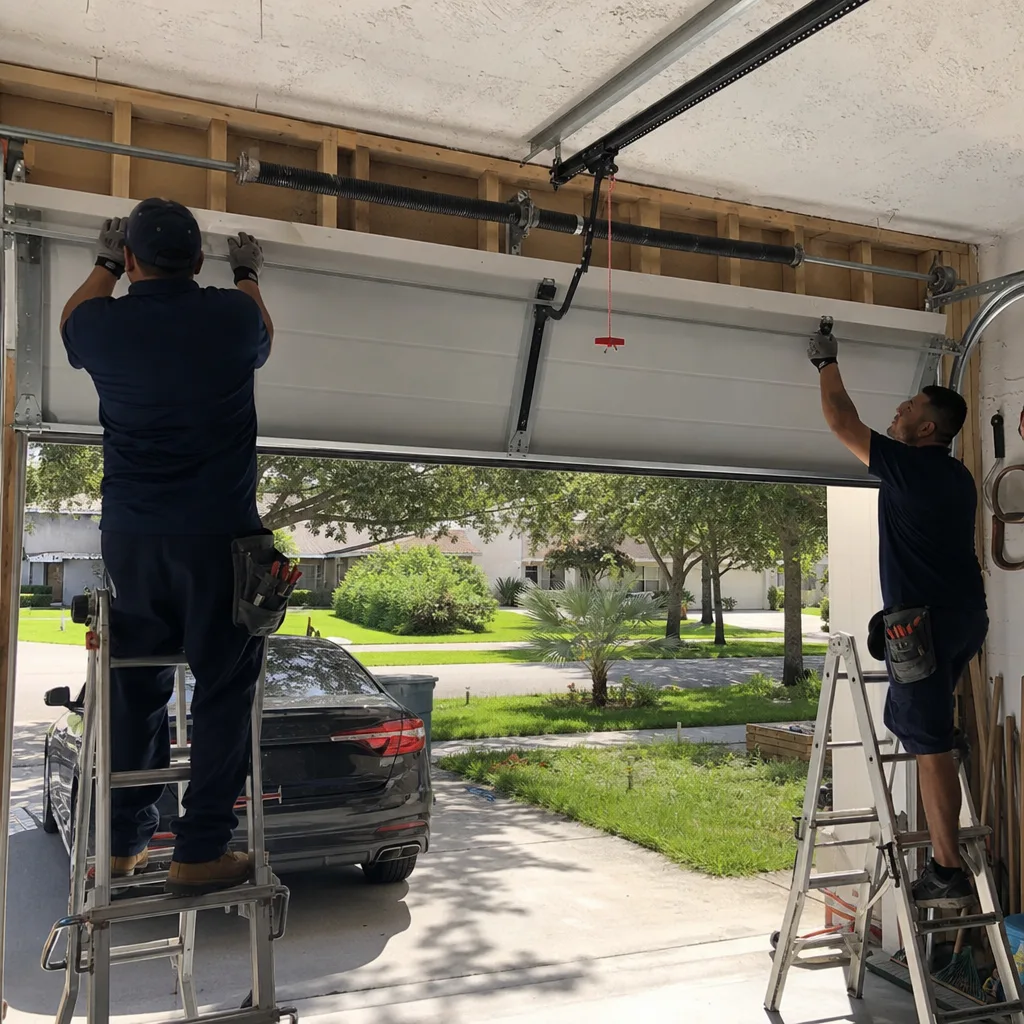
This checklist takes about 30 minutes. It requires a socket wrench, a flashlight, and the willingness to look at the parts most people never look at. The documentation step matters just as much as the inspection itself, and we cover that in a later section. For homeowners who want a second set of eyes, garage door repair in Boynton Beach includes a full hardware inspection, with the findings documented in writing and photos before any quote is issued.
Wet Season (June-September): Moisture, Lubrication, and Daily Cycling
From June through September, Boynton Beach receives the bulk of its annual rainfall, often in afternoon downpours that can drop two inches in an hour. The relative humidity rarely dips below 70 percent, and the combination of standing moisture, heat, and salt aerosol creates ideal conditions for surface corrosion on steel hardware. The wet season is not when you perform major repairs. It is when you prevent moisture from getting where it does not belong, and you keep the moving parts lubricated so that corrosion does not bind them.
Three tasks define the wet season, and none of them requires a professional:
- Lubricate the rollers, hinges, and torsion spring every 90 days. Use a white lithium grease or a garage door-specific spray lubricant. Apply a small amount to each hinge pivot point, each roller bearing (the stem that enters the track, not the wheel face that rides the track), and the torsion spring coils. Wipe away excess. The goal is a thin film that prevents surface rust, not a dripping coat that attracts dirt and sand. LiftMaster and Chamberlain openers have durable rails, but the door hardware itself needs this attention.
- Check the weatherstripping on all three non-door sides of the opening. The vinyl weatherstripping along the jambs and header degrades faster in Boynton Beach than almost anywhere else in the country because of continuous UV exposure. Press on it. If it feels brittle, cracks when flexed, or has pulled away from the frame, it is no longer sealing. Water that runs down the wall face during a heavy rain will find the gap and enter the garage.
- Watch for water pooling near the door after storms. Boynton Beach lots, particularly in the older neighborhoods east of I-95, often have minimal slope away from the garage. If water pools within six inches of the door slab after a typical afternoon rain, the bottom seal is the last line of defense. During a named storm, that pooling becomes standing water pressure. Consider a threshold seal as a secondary barrier if the pooling is chronic.
One pattern we see every wet season: a homeowner notices the door moving slower than usual or making a grinding sound, and assumes the opener motor is failing. More often, the problem is corrosion or worn rollers creating additional drag, which makes the opener work harder and trip its thermal overload. Replacing the rollers and lubricating the track returns the system to normal without touching the opener. It is a good example of why a visual and mechanical assessment during the wet season matters: the fix is often a $30 set of rollers, not a $400 logic board.
Post-Rainy-Season Assessment (October-November): Salt and Rust Intrusion
By late October, the six-month exposure window has ended. The door has survived the wet season, possibly a tropical storm or hurricane, and months of salt-laden air. This is the moment to assess what six months of moisture and salt actually did to the components, before the dry season masks the symptoms and gives a false sense of stability. The October assessment is about finding damage before it reaches the point of component failure.
Specific things to document in October and November:
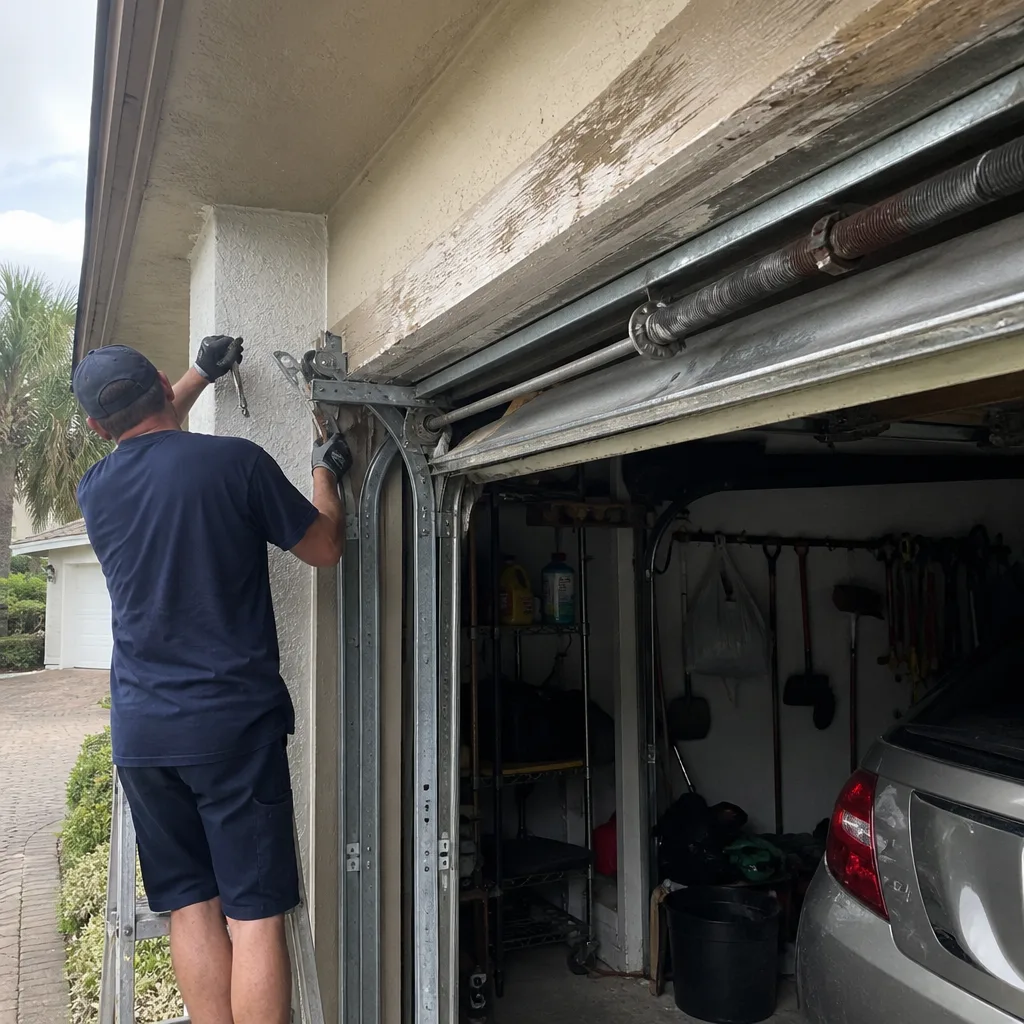
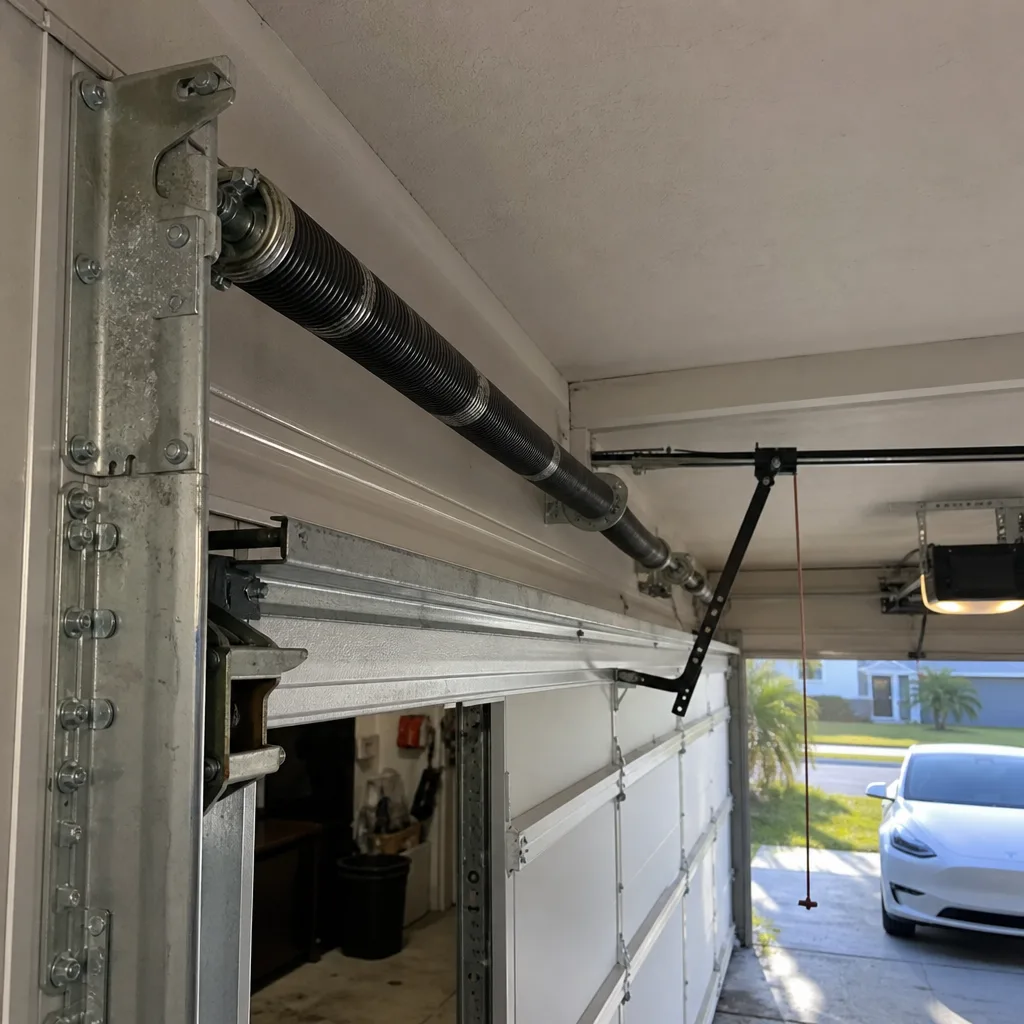
- Torsion spring surface condition. Examine the entire coil length with a flashlight. Surface rust that looks like an orange dusting is common and not immediately fatal, but it is the precursor to deeper pitting. Pitting creates stress risers, and a pitted spring under tension eventually snaps at the deepest pit. If you see pitting, photograph it and note the date. If the spring also shows a gap at a coil, that is a partial fracture, and the spring needs to be replaced by a technician before it fails completely. In Boynton Beach, a torsion spring typically lasts five to seven years with regular use. A spring exposed to constant salt corrosion may fail sooner.
- Cable condition at the drum and at the bottom bracket. The lift cables are steel wire and are just as vulnerable to corrosion as the spring. Examine the area where the cable winds onto the cable drum above the spring line. Look for individual wire strands that have broken and are peeling away, often called “bird caging.” A single broken strand means the cable has lost structural integrity. Do not attempt to repair or replace cables yourself; they are under constant tension and can cause severe injury.
- Bottom seal and retainer corrosion. The aluminum retainer that holds the bottom seal is exposed to every drop of water that falls on the lower door section. In a coastal environment, the fastener screws that hold the retainer often corrode before the seal itself degrades. Check both.
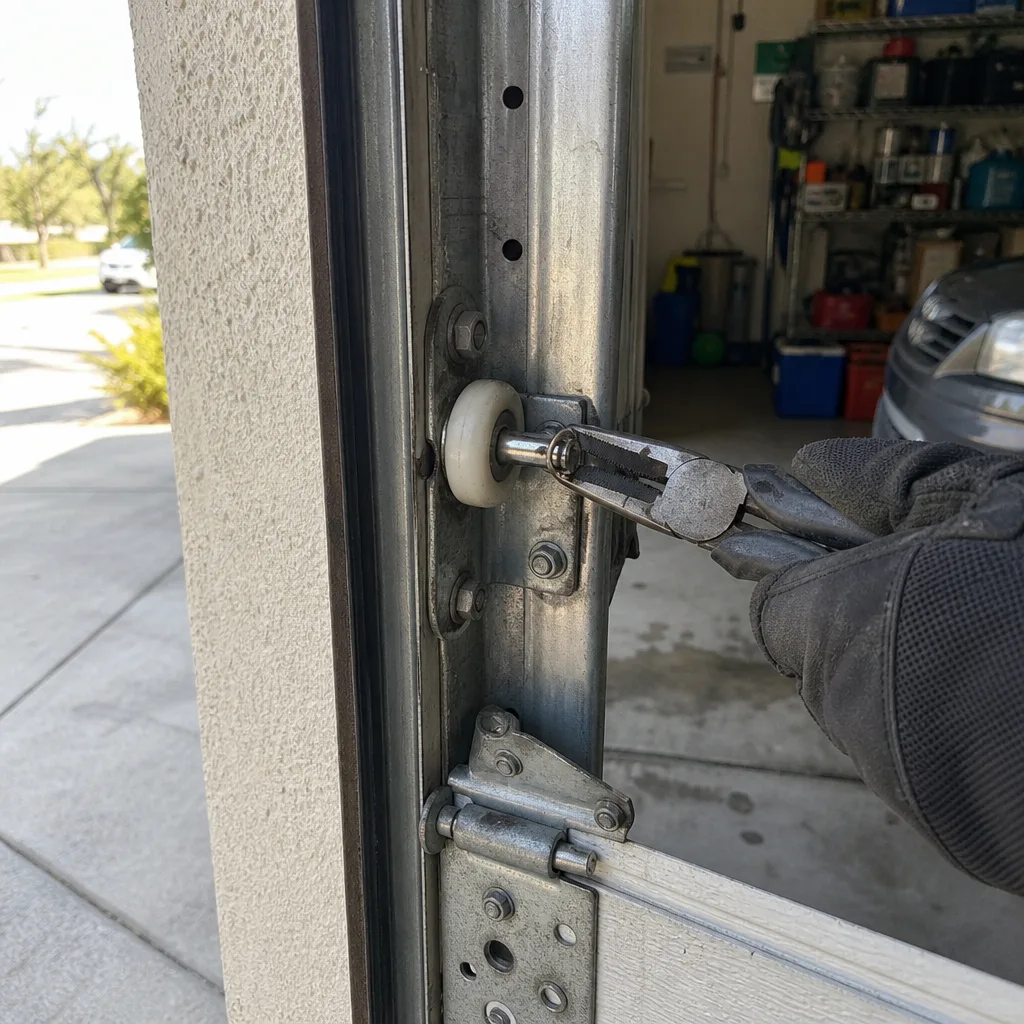
- Hinge and roller wear. With the door closed, look at each hinge point. A hinge that shows rust around the pin is stiffening. A roller with a flattened or pitted wheel will transfer vibration into the track and opener. Rock each roller with a finger. Movement beyond the designed rotation path indicates a worn bearing.
The October assessment is the single best predictor of whether a garage door will make it through the following year without a failure. It is also where the documentation habit pays off: a photo of spring pitting taken in October 2025 becomes the evidence that justifies a replacement recommendation in March 2026, rather than an assertion from a technician who just met you. That is precisely how we approach garage door installation in Boynton Beach: the recommendation is supported by a photo record, not a sales script.
Dry Season (December-March): UV Degradation and Thermal Clearance
The dry season is the most pleasant time to work on a garage door in Boynton Beach, and it is also the season when two specific problems show themselves: UV degradation and thermal clearance changes. The dry season, from December through March, is when the sun angle is lower and the daily temperature swing is at its widest, and both conditions stress certain components differently than the wet season does.
UV degradation on weatherstripping and painted steel. The jamb weatherstripping, the bottom seal, and the vinyl trim around the exterior of the door absorb direct sun for hours every day. By the time the dry season arrives, the previous summer’s UV exposure has done its work. Vinyl weatherstripping becomes brittle, loses its flexibility, and cracks when compressed. Painted steel panels, particularly on south-facing and west-facing walls, fade and chalk. Neither of these is a structural emergency, but both are worth a deliberate look in January or February, when the temperature is comfortable and you can spend a full hour outside without heat exhaustion.
Thermal expansion clearance on aluminum doors. Aluminum garage doors expand and contract with temperature changes more than steel doors do. A door installed in July, when the rails are hot and the panels expanded, will fit differently in January, when the overnight temperature drops. The most common symptom is a door that rubs against the jamb on one side after installation, or a door that develops a small gap at the top when closed. If you have an aluminum door, check the clearance between the door edge and the track on both sides in December. A difference of more than a quarter inch between the two sides suggests the track was set in warm conditions and has settled. This is a simple adjustment for a technician, but it is another one of those things that goes unnoticed until the door starts wearing against the jamb and the rollers chew into the track.
The dry season is also the best time to run the full-year review: look back at the October photos, compare the current condition, and decide whether any of the documented issues have progressed. A spring with minor pitting in October that shows deeper pitting in February is a spring that should be replaced before it becomes the reason your car is trapped in the garage in August.
How to Document Each Seasonal Check So the Next Technician Has a Baseline
Most homeowners in Boynton Beach have never had a garage door technician hand them a photo of a failed part before asking for a replacement. That is not how the industry has traditionally worked, and it is why the industry has the reputation it does. Servo Garage Doors was built in 2015 on a different premise: the customer sees the failed part before anyone quotes a replacement. It is codified as Clause 4 of The Haven Standard. The photo record is not optional. You can apply the same logic to your own seasonal maintenance, and it will change how any future repair conversation goes.
Here is a simple documentation routine that takes less than ten minutes per seasonal pass:
- Take dated photos of the same six points every time. The six points are: the right torsion spring end, the left torsion spring end, the right cable drum, the left cable drum, the bottom seal from inside the garage, and the right-side track bracket set. Using the same six angles season after season creates a comparable record. The photo metadata includes the date automatically on any modern phone.
- Note any measurements you took. If you checked the gap between the door edge and the track, write down the measurement. “Right side 1/4 inch, left side 3/8 inch, December 2025” is useful data. “Looks fine” is not.
- Store the photos in a folder labeled by date. The simplest system is a phone photo album named “Garage Door” with the season in the file name or album name. You are building a timeline, not an archive.
- When a technician sees a problem and recommends a repair, ask for the photo. If they cannot produce one, that is an answer, not a question. We photograph the failed component on every service call, before quoting anything. If the spring is pitted, you will see the pitting in the photo. If the cable is frayed, you will see the frayed strands.
This baseline documentation does more than protect you from unnecessary upsells. It makes the technician’s job faster and more accurate. A door that has a documented history of spring pitting in October followed by a snap in February is a well-understood failure. A door with no history requires a broader diagnosis. If you have concerns during any seasonal check, garage door opener repair in Boynton Beach and full-system inspections are available, and the photo record comes with the call.
Which Tasks You Can Do Yourself and Which Require a Licensed Technician
The dividing line is simple: anything under direct spring or cable tension requires a licensed technician. Everything else is fair game for a homeowner with basic tools and reasonable caution.
Homeowner tasks (safe with household tools):
- Visual inspection of all hardware, brackets, and tracks
- Tightening lag bolts and machine screws where accessible
- Lubricating hinges, rollers, and torsion springs
- Measuring and photographing spring, cable, and track condition
- Replacing the bottom seal when it is accessible (most slide out of the retainer without tooling)
- Replacing weatherstripping on the jambs
- Testing the balance by disengaging the opener and manually lifting the door
- Testing the auto-reverse safety function on the opener
Technician tasks (never attempt these yourself):
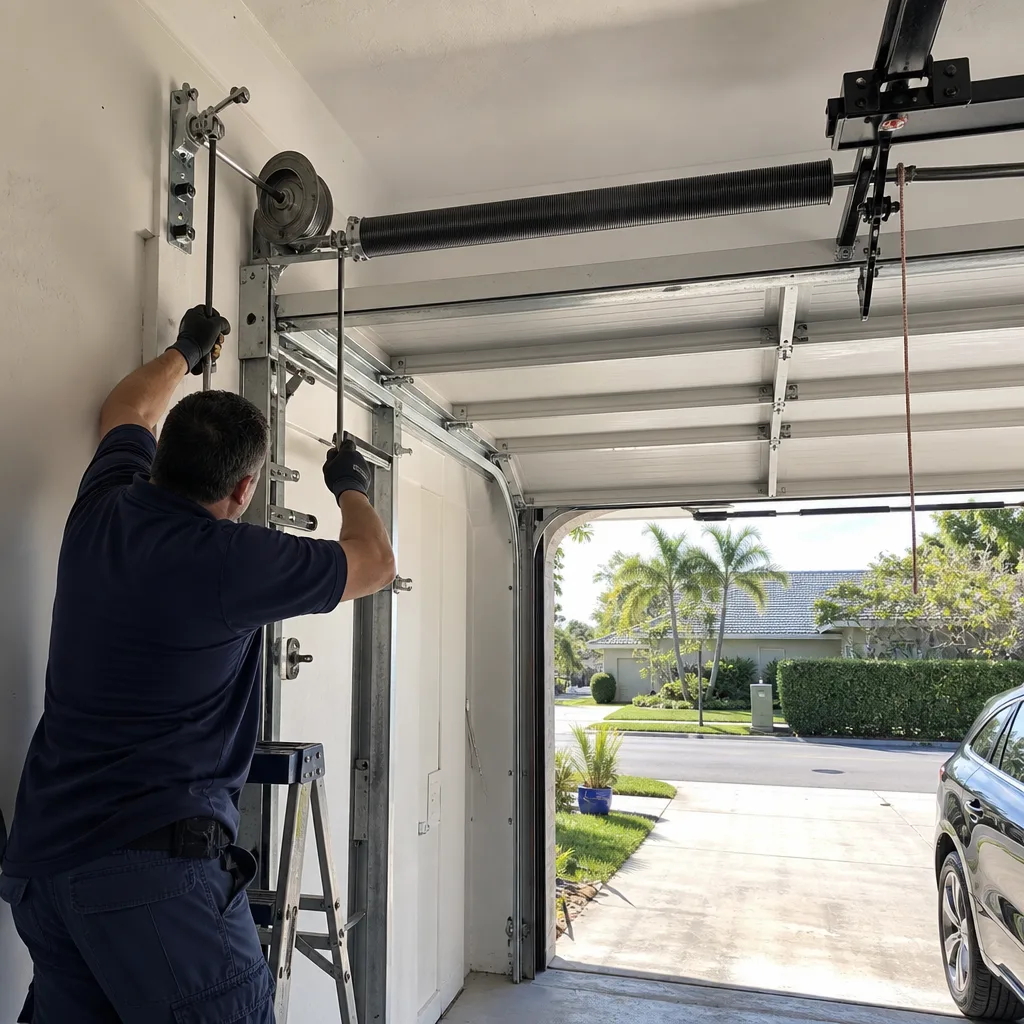
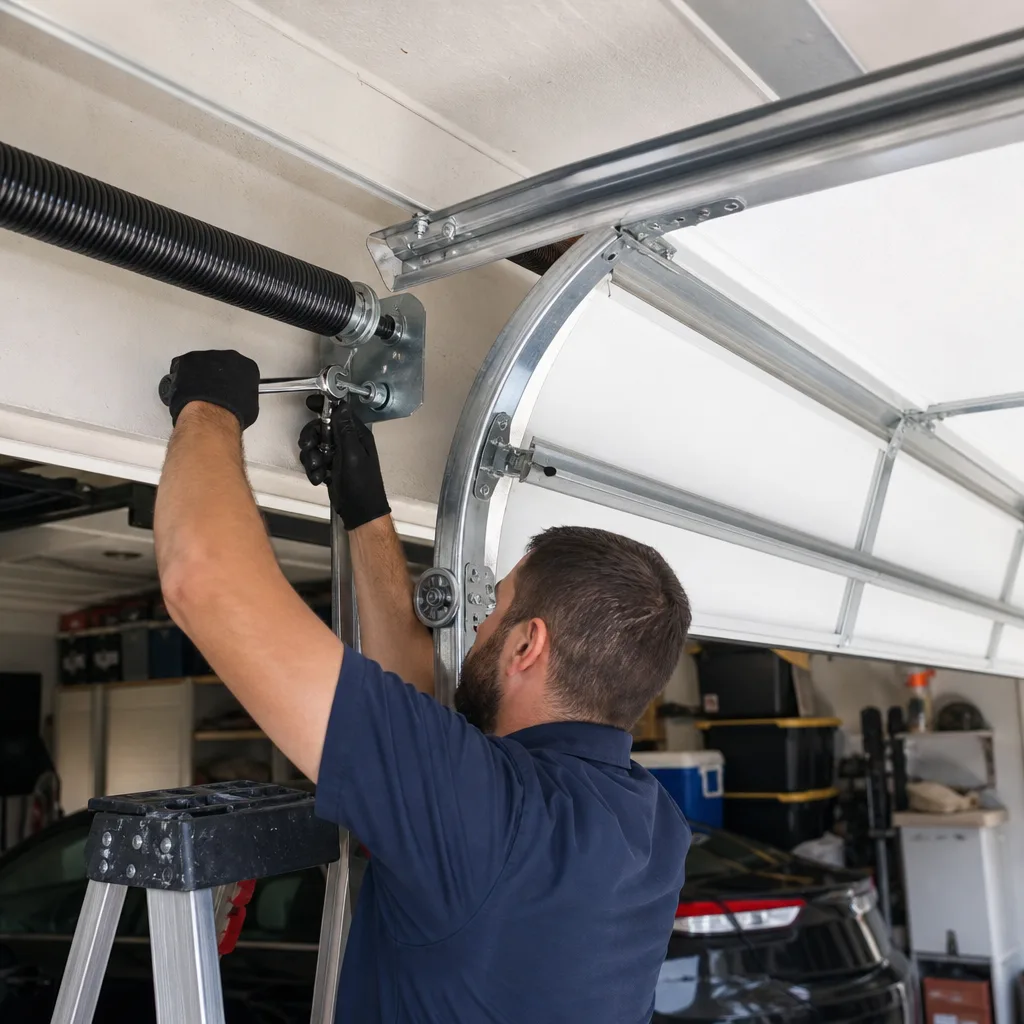
- Adjusting, replacing, or winding torsion springs. A torsion spring stores enough energy to break bone. The winding process uses two steel bars called winding rods inserted into the spring collar, and a mistake mid-wind releases all that energy at once. We have never met a homeowner who saved enough money on a DIY spring job to make the risk rational.
- Replacing or adjusting lift cables. The cable is under spring tension at all times. Cutting the wrong cable or disconnecting the wrong end releases the door, which can weigh 300 pounds or more.
- Adjusting cable drums. The drums are what keep the door level as it travels. An adjustment error here causes the door to bind, which under load can pull the track off the wall.
- Replacing the bottom bracket. The bottom bracket connects the cable to the door and is under full spring tension. It is the single most dangerous component on the door for a DIY repair.
- Skipping the April inspection because “the door works fine.” Wind-load failures do not announce themselves in normal operation. A loose lag bolt feels exactly like a tight one until 90 mph wind tests it. The April check catches the bolt before the September storm does.
- Using WD-40 on rollers and hinges. WD-40 is a solvent and a water displacer, not a lubricant. It dissolves existing grease and leaves the metal surface dry, which accelerates corrosion in Boynton Beach humidity. Use white lithium grease or a garage door-specific lubricant.
- Oiling a torsion spring that is already pitted without documenting it first. Lubrication slows further corrosion but does not repair existing pitting. Photograph the pitting before you lubricate so there is a record.
- Replacing the bottom seal without checking the retainer screws. In a coastal environment, the screws that hold the seal retainer often corrode more aggressively than the seal itself. A new seal on a deteriorated retainer fails within months.
- Ignoring a door that operates slightly unevenly for weeks. A door that is one inch higher on one side is putting asymmetrical load on the cables and drums. That asymmetry compounds, and the repair cost compounds with it. Address it within days, not months.
- Assuming a noisy door means the opener motor is failing. More often in Boynton Beach, the noise is a worn roller, a dry hinge, or a loose bracket. Diagnose the cheap components before condemning the opener.
- Waiting until you need the garage for a car repair to discover the door won’t open. The door that fails is almost always the one that showed warning signs for months. The seasonal checks exist so that the failure happens on your schedule, not at 7 a.m. on a work day.
If the task involves the word “tension” or “cable,” call a professional. In Boynton Beach, Servo Garage Doors Boynton Beach handles these repairs daily, with a written price confirmed before any work starts. There is no middle ground on this. The money saved on a DIY spring replacement does not exist, because the injury risk is catastrophic.
Common Mistakes to Avoid
When to Call a Professional
Call a licensed garage door technician if you find any of the following: a torsion spring with visible pitting, a coil gap, or a clean break; a lift cable with broken strands or bird caging; a track bracket that pulls away from the wall when pushed; a door that drops or drifts when disengaged; or any component whose repair involves wound torsion springs or tensioned cables. Also call if the April wind-load checklist reveals more than two loose lag bolts, if the door binds unevenly, or if the auto-reverse fails to activate when tested. Servo Garage Doors Boynton Beach offers free estimates in Boynton Beach, with a written scope and flat price confirmed before work starts. Call (754) 227-2243. If you have a written estimate from another company, bring it in. We will give you a free second opinion on the paperwork.
Frequently Asked Questions
Lubricate the hinges, rollers, and torsion spring every 90 days during the wet season, from June through September, when humidity and salt are at their worst. A quarterly schedule year-round works well, but the wet season is the minimum. Use white lithium grease or a garage door-specific spray lubricant, and wipe away excess so it does not collect sand and dirt.
The pre-hurricane wind-load inspection in April or May. It involves checking the horizontal track brackets for movement, torqueing the lag bolts, examining the bottom seal for gaps, and testing the door balance. This is the check that catches the hardware failures a storm will exploit, and it costs nothing but 30 minutes of time.
Yes. Salt aerosol from the ocean accelerates surface corrosion on steel components, including torsion springs. A spring that might last seven years in a non-coastal climate can fail in five to six years in Boynton Beach, particularly if it is not lubricated and if surface rust is allowed to progress into pitting. Document the spring condition each October so you have a running record.
No. A torsion spring is wound under hundreds of pounds of tension, and the winding process requires training, proper winding rods, and a specific sequence. A mistake during winding releases that energy instantly, and the injuries are severe. This is the one repair that should never be attempted by a homeowner, regardless of YouTube confidence. Call a licensed technician at (754) 227-2243 for a written quoted price before work starts.
Check the jamb weatherstripping and bottom seal in October, after the wet season, and again in January, after several months of full UV exposure. If the vinyl is brittle, cracked, or pulled away from the frame, replace it. In Boynton Beach, expect to replace weatherstripping every two to three years, sooner than inland locations because of the combined salt and UV exposure.
No. Estimates are free, and every job is quoted with a flat written price and written scope before any work begins. That is Clause 1 of The Haven Standard. The price you see on the written estimate is the price you pay, and you receive a documented photo record of what was found and what was done on every visit. Call (754) 227-2243 to schedule.
The Bottom Line
Seasonal garage door care in Boynton Beach is not a northern maintenance calendar with the state name changed. For a Garage Door Cost Breakdown: The Boynton Beach Homeowner’s Reference for 2026, see our pricing guide. It is a four-part rhythm built around the actual environment: wind-load inspection in April and May, moisture and lubrication discipline from June through September, salt and rust assessment in October and November, and UV and thermal clearance checks from December through March. Each season has a specific job, and each job catches the evidence of what the previous season did. Document everything in photos, use the right lubricant, keep your hands off the torsion springs, and call a licensed technician when the work involves tension or cables. A garage door that is checked four times a year fails on a schedule you choose. A door that is ignored fails on a schedule the weather chooses.
Written by Marcus Deller, Owner at Servo Garage Doors Boynton Beach, serving Boynton Beach since 2015. Explore more guides & resources on garage door care.