
Last updated September 20, 2026
Full 25-point door and opener safety check with every visit - springs, cables, rollers, tracks, and your LiftMaster or Chamberlain opener included
You get a price before we start. It does not change when the truck arrives.
 Before
 After
After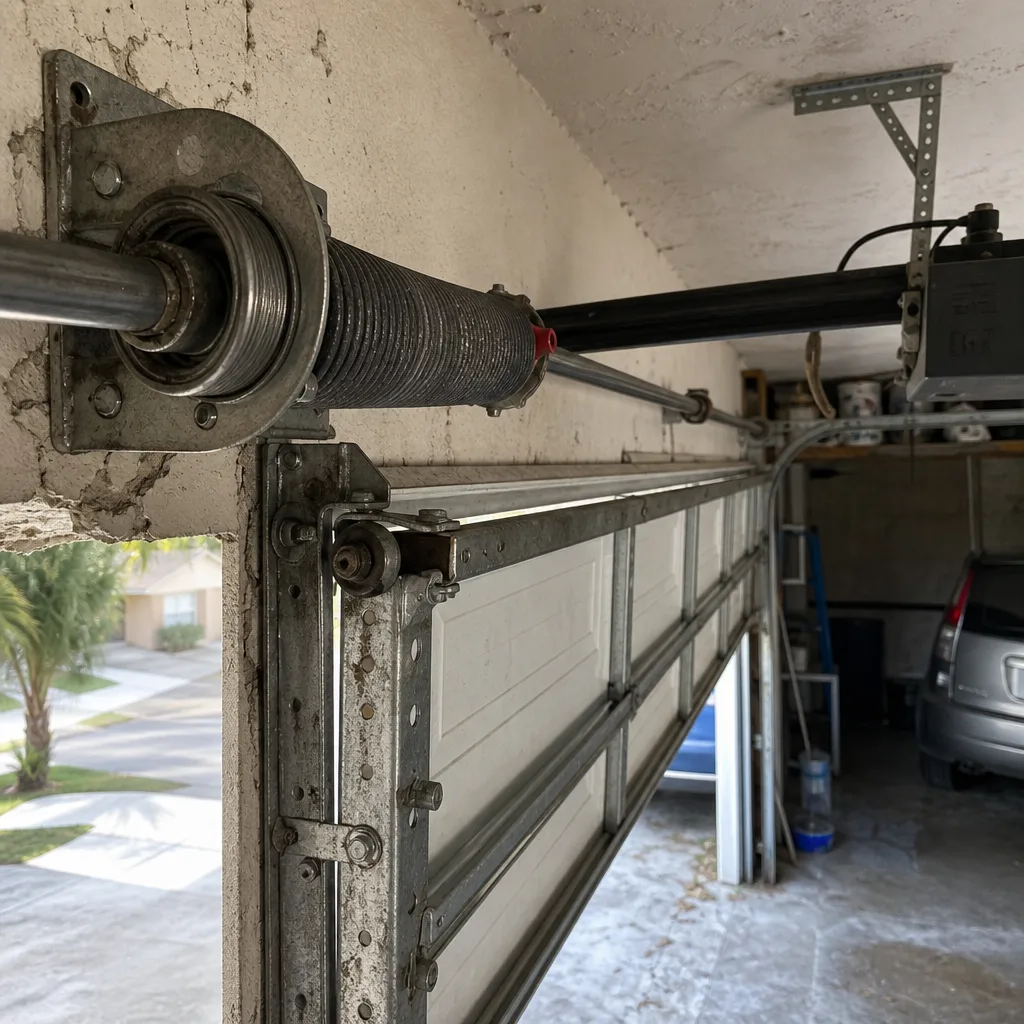 Before
 After
After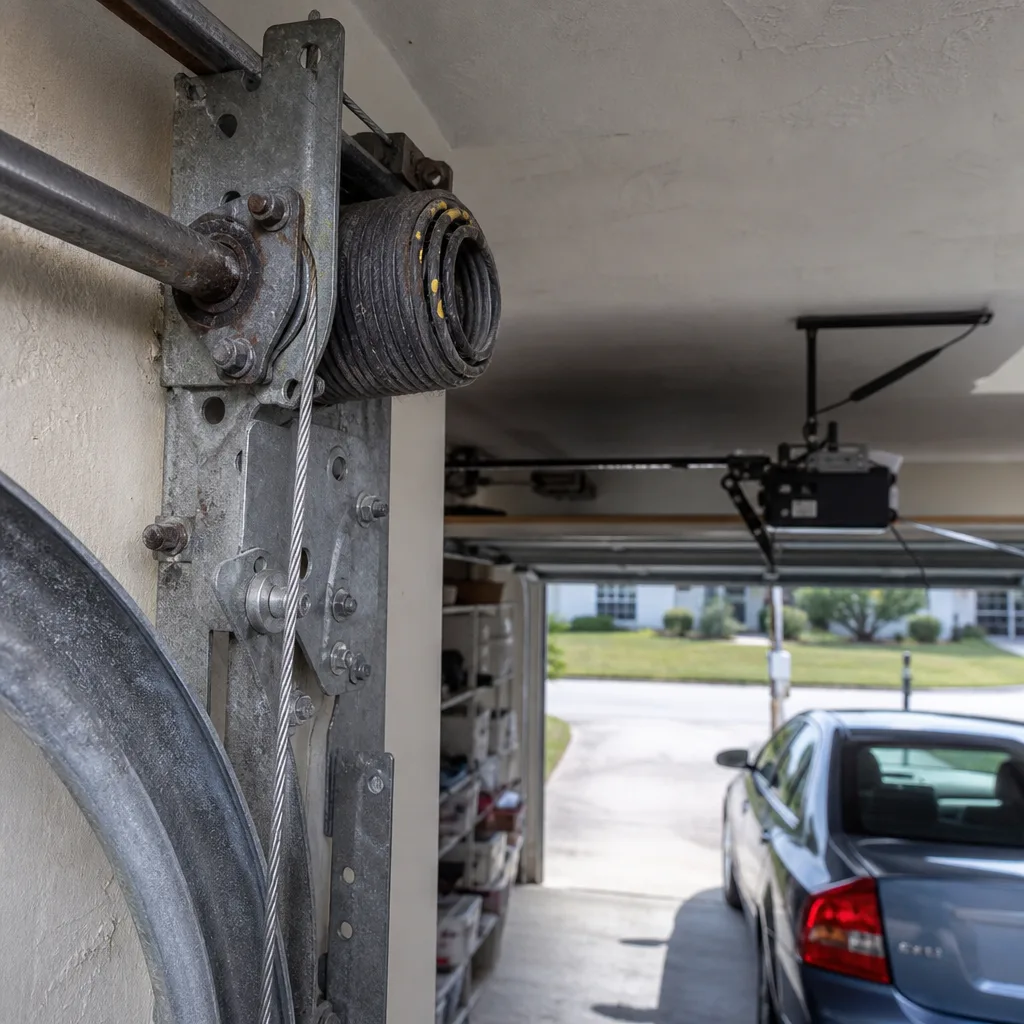 Before
 After
AfterDIY vs Professional Garage Door: The Boynton Beach Homeowner’s Decision Guide
Replacing a bottom seal is a legitimate DIY task that takes 45 minutes and costs about $20 in materials. Adjusting torsion spring tension is a task that sends roughly 2,000 people to emergency rooms every year in the US, and Florida law restricts who can perform that work for compensation. Most more guides & resources on this topic hedge with “it depends.” This one doesn’t. By the time you finish reading, you’ll know exactly which garage door tasks you can handle on a Saturday morning in Boynton Beach, which ones Florida statute puts off-limits, and which ones carry injury risk that no amount of tutorial-watching eliminates. The line isn’t drawn by confidence. It’s drawn by category.
Quick Answer
Most garage door maintenance in Boynton Beach is DIY-appropriate: bottom seal replacement, weatherstripping, track lubrication, sensor realignment, and extension spring roller swaps. Two categories require a licensed professional: torsion spring work (restricted by Florida law when performed for compensation, and genuinely dangerous regardless of who does it) and anything that touches structural supports or electrical wiring. If the task involves a torsion spring, a cable under tension, or a permit, call a professional. Everything else, with the right tools and a methodical approach, is within a careful homeowner’s documented capability.
Table of Contents
- The Three-Category Classification: What’s Yours, What’s Ours, What’s Nobody’s
- Florida Law and Garage Door Work: What the Statute Actually Says
- DIY-Safe Tasks: Step-by-Step for Homeowners
- Torsion Springs: The Injury Risk Nobody Should Take
- The Cost of DIY Failure: What We See on Service Calls
- The Tool Question: What You Need vs. What We Carry
- Permits, Insurance Claims, and Home Sales: The Paper Trail Nobody Warns You About
- Boynton Beach Climate and Your Garage Door: Why This Market Is Different
BeforeAfterThe Three-Category Classification: What’s Yours, What’s Ours, What’s Nobody’s
We’ve worked on more than 18,000 garage doors since 2015, and the DIY-versus-professional question has a cleaner answer than most homeowners expect. Every garage door task falls into one of three categories. The first is homeowner-appropriate: tasks that require basic tools, carry minimal injury risk, and won’t void a warranty or violate code if done correctly. The second is licensed-contractor-required: work that Florida statute restricts, either because it touches tensioned components or because it must be permitted and inspected. The third is injury-risk-regardless-of-skill: work that is dangerous even for professionals, where the only difference is that professionals have trained for years and carry insurance.
Homeowner-appropriate tasks:
- Bottom seal and weatherstripping replacement
- Track and roller lubrication
- Photo-eye sensor cleaning and realignment
- Remote control and keypad battery replacement
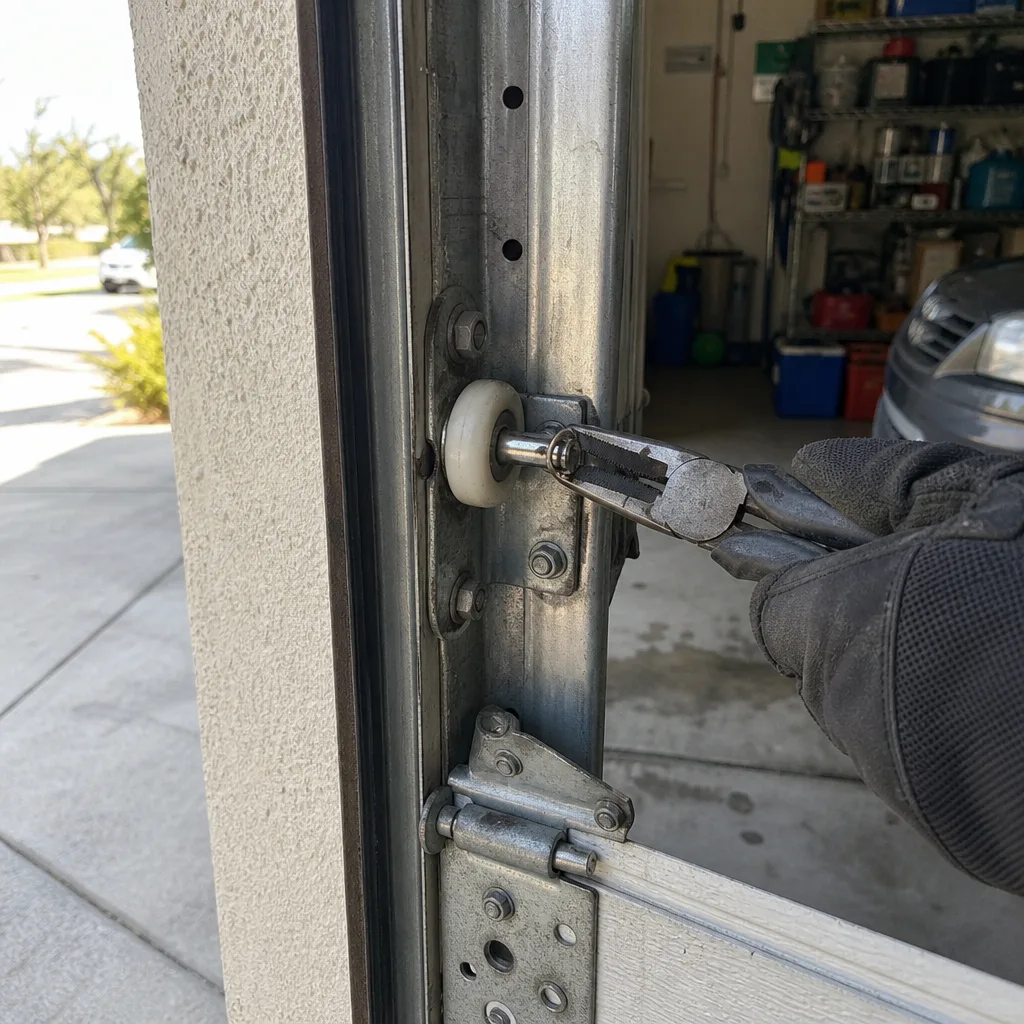
- Hinge and roller replacement on extension spring systems (with the door properly braced)
- Visual inspection of cables, springs, and mounting hardware
Licensed-contractor-required tasks in Florida:
- Torsion spring replacement and winding
- Cable replacement on torsion spring systems
- Any structural modification to the door or framing
- Any work requiring a building permit
Injury-risk-regardless-of-skill tasks:
- Torsion spring adjustment or replacement
- Bottom bracket and cable work under tension
- Any repair performed on a door that has slipped off its track
That third category matters more than most DIY articles admit. A seasoned technician with fifteen years in the field can still lose a finger to a torsion spring that releases unexpectedly. The difference is that they carry workers’ compensation insurance, and you carry your own medical deductible. Our position is simple: if the task is in the first list, go ahead and do it carefully. If it’s in the second or third, call someone who does this work every day. The garage door repair services in Boynton Beach that follow this classification are the ones worth trusting, because they respect the line instead of selling you urgency.
Florida Law and Garage Door Work: What the Statute Actually Says
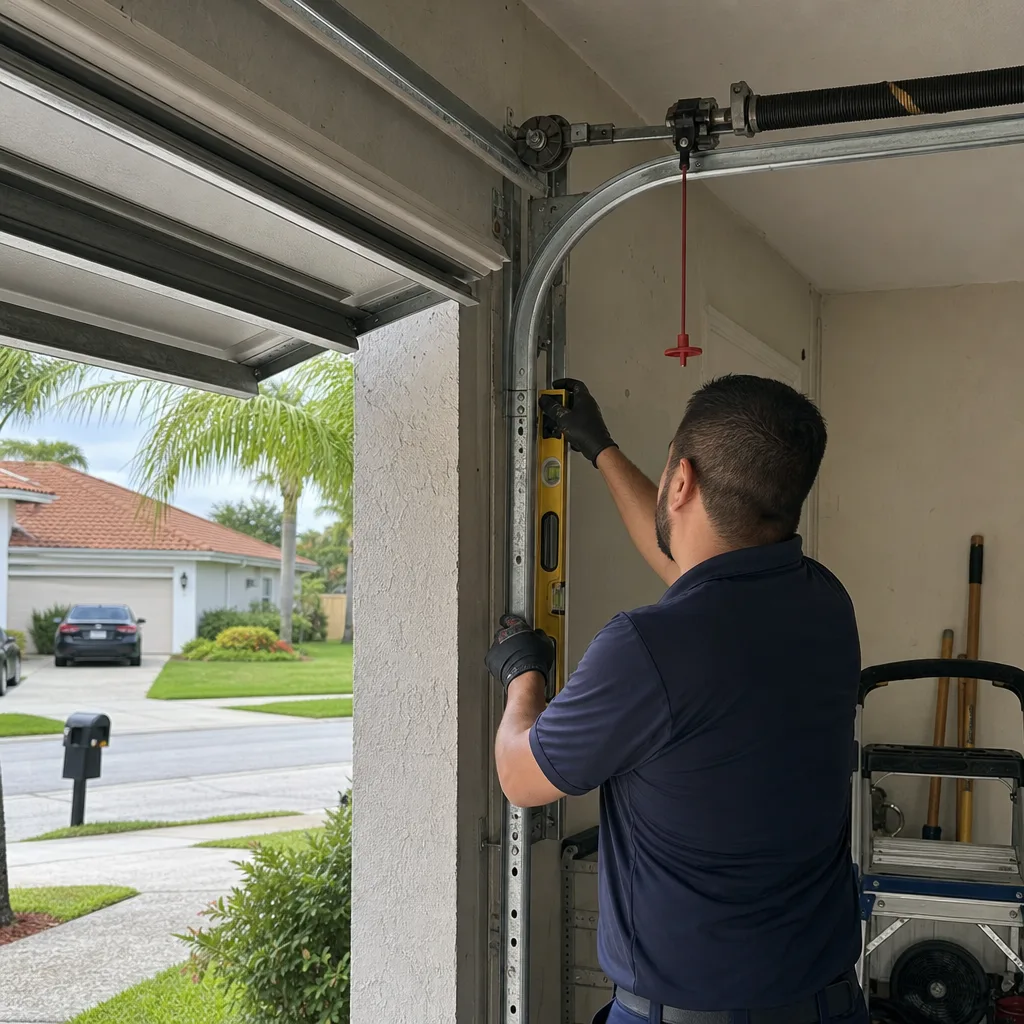
Florida Statute 489.103 defines garage door installation and repair as a “specialty structure” category under contractor licensing. Here’s what that means in plain English: any person who performs garage door work for compensation in Florida must hold a license issued by the Department of Business and Professional Regulation or a local licensing authority. Doing that work without a license is a first-degree misdemeanor. The statute does not prevent a homeowner from working on their own owner-occupied residence. It does, however, create two situations that catch people off guard.
First, if you own a rental property in Boynton Beach and you replace a torsion spring yourself, you’ve crossed the line. You’re performing work on a property that generates compensation, and an insurance claim after a garage door failure could be denied on that basis. Second, if you complete unpermitted structural or electrical work and later sell the home, a title search or inspection that reveals the unpermitted modification becomes your problem to correct. See our Garage Door Permits, Codes & Inspections in FL: What You Need to Know for details. We’ve seen Boynton Beach home sales delayed by exactly this: a homeowner replaced their own garage door, skipped the permit, and the buyer’s lender flagged it during underwriting.
The takeaway isn’t “don’t work on your home.” It’s “know which work requires a license, and don’t blur that line.” A homeowner can replace a bottom seal on any property they own without a second thought. A homeowner cannot legally charge a neighbor to replace their garage door opener without holding the appropriate license in Florida. The statute draws the line at compensation, not capability.
DIY-Safe Tasks: Step-by-Step for Homeowners
If you’re in Boynton Beach and you want to handle some of your own garage door maintenance, here are the tasks we tell homeowners are genuinely within reach, with the steps done right.
Task 1: Bottom Seal Replacement
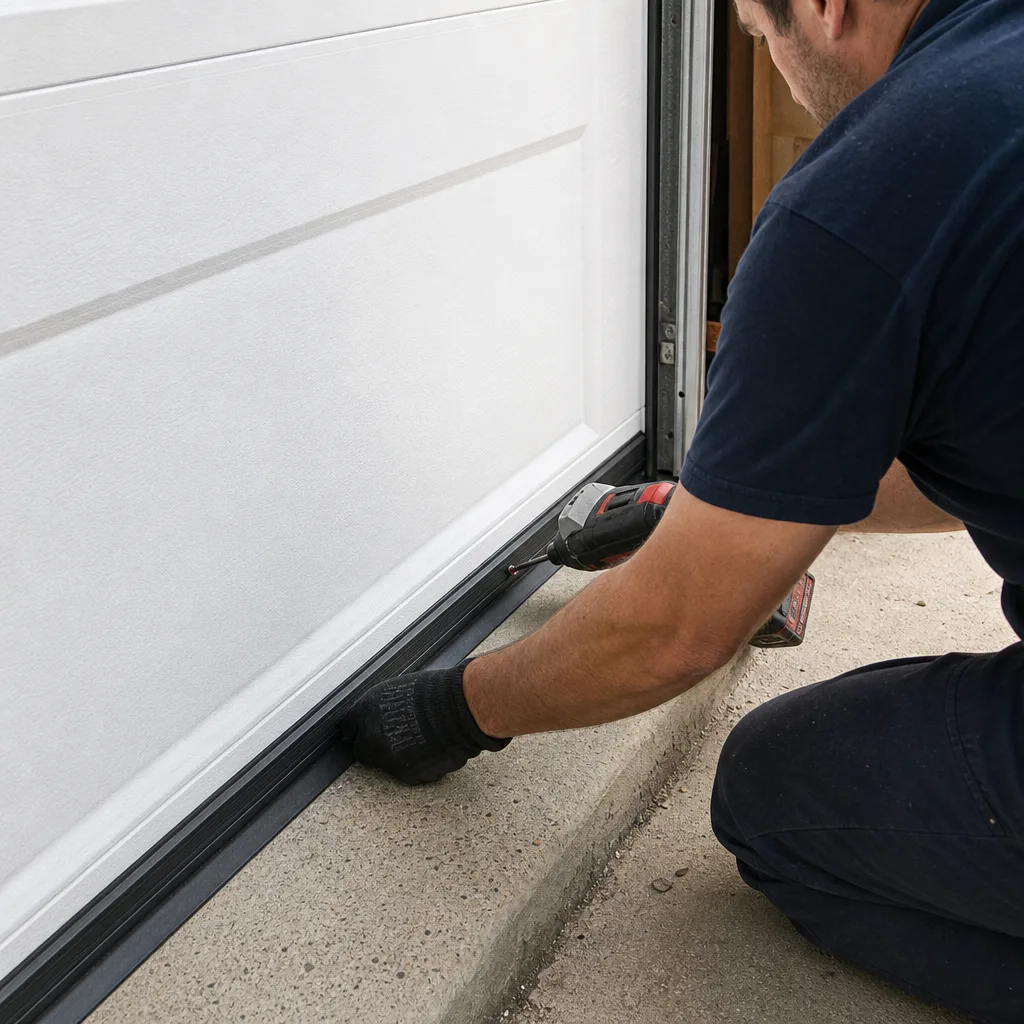
The bottom seal is the rubber strip that runs along the bottom edge of the door. It keeps rainwater, insects, and hot air out. In Boynton Beach, where afternoon thunderstorms and humidity are constant, a worn seal shows up fast: look for daylight under the door, water streaks on the floor, or leaf litter that blows in. Most seals are T-shaped and slide into a channel on the bottom of the door. The replacement takes about 45 minutes and costs $20 to $40 in materials, and it’s available at any hardware store or online.
- Close the door completely and disconnect the opener by pulling the release handle.
- Cut the old seal at one end with a utility knife and pull it out of the channel.
- Clean the channel with a damp rag and a flathead screwdriver to remove debris.
- Feed the new seal into the channel. Some seals slide in easily; others need soapy water as a lubricant.
- Trim the excess with a sharp utility knife. Close the door and check for gaps.
This task requires no special tools, no permit, and no license. It’s the one we recommend most often to Boynton Beach homeowners who ask us what they can do themselves.
Task 2: Photo-Eye Sensor Realignment
Two small sensors sit near the floor on either side of the garage door opening. One sends an infrared beam; the other receives it. If the beam breaks, the door refuses to close. In humid coastal air like Boynton Beach’s, sensors get bumped by mowers, bicycles, and the occasional iguana, and they drift out of alignment.
- Look at the small LED light on each sensor. Both should be lit.
- Loosen the wing nut that holds each sensor in place.
- Adjust the sensor until the receiving light is solid, not blinking.
- Tighten the wing nut. Test the door.
If the sensors are aligned but the door still won’t close, the issue may be in the wiring or the logic board, and that’s where homeowner territory ends. A technician’s diagnostic tools and experience earn their cost at that point. We’ve seen more than one homeowner spend an entire weekend chasing a sensor issue that turned out to be a failing logic board on the opener itself.
Task 3: Lubrication
Lubricating your garage door twice a year extends the life of the rollers, hinges, and springs. Buy white lithium grease for the hinges and rollers and a silicone-based lubricant for the springs. Avoid WD-40, which displaces moisture but doesn’t provide lasting lubrication. In Boynton Beach’s salt air, proper lubrication is not optional; it’s the difference between a door that runs for eleven years and one that binds up at year six.
- Disconnect the opener and open the door manually.
- Apply lubricant to each hinge pivot, each roller bearing, and the spring coils.
- Wipe away excess with a rag.
- Close the door and run it through two cycles with the opener.
This is 15 minutes of work, twice a year. It prevents more service calls than any other habit.
Torsion Springs: The Injury Risk Nobody Should Take
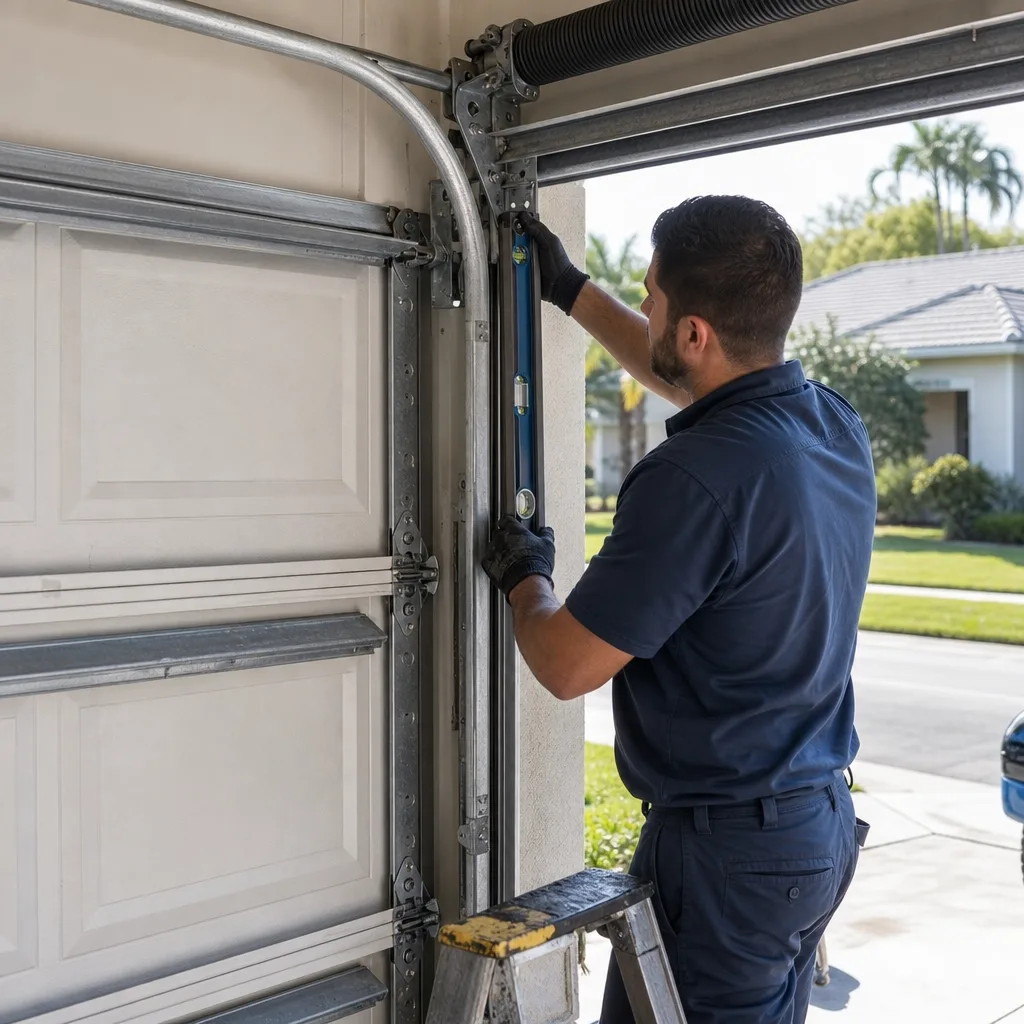
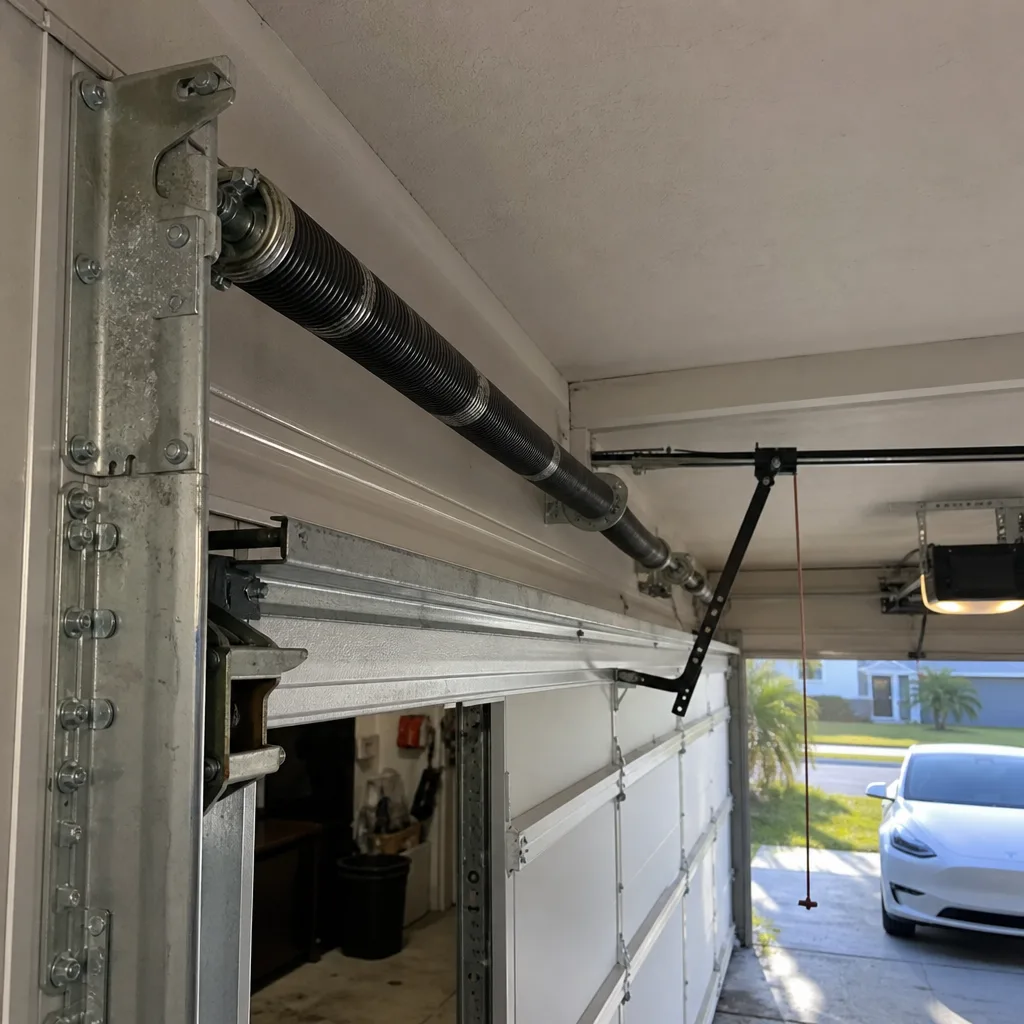
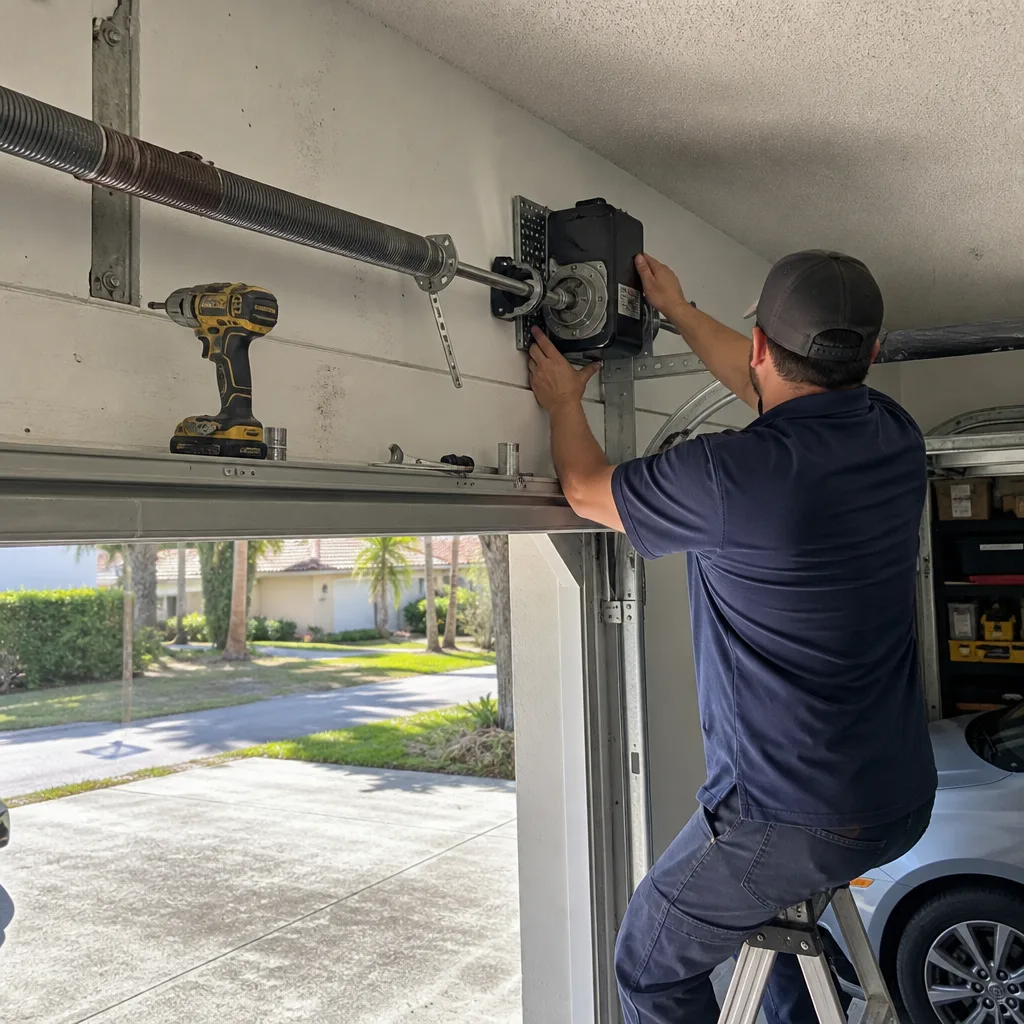
A torsion spring is the coiled steel bar mounted horizontally above the inside of the garage door opening. It counters the weight of the door, storing mechanical energy when the door is down and releasing it when the door opens. A typical residential torsion spring in a Boynton Beach single-family home holds between 100 and 150 pounds of torque per coil at full winding. If the winding cone fails, the spring can release that energy almost instantly, and the bar itself, called the winding cone, becomes a projectile.
The documented injury pattern is consistent: facial lacerations, broken bones in the hand and forearm, and in severe cases, permanent nerve damage or death. The 2,000 emergency room visits per year estimate comes from the US Consumer Product Safety Commission’s own data, and most of those injuries are from torsion springs, not extension springs. We don’t include this statistic to scare anyone. We include it because the same CPSC data shows that a significant number of those injured were confident they had the right tools and had watched a tutorial before starting.
Our technicians photograph the failed component before quoting a replacement. That’s Clause 4 of The Haven Standard, and it exists because seeing the failed spring, with its wire diameter and break point, explains the danger better than any verbal warning. A spring that measures 0.225 inches and shows a clean break at the coil is a fatigue failure waiting to happen. A spring that measures 0.25 inches and shows a jagged break is a corrosion failure. Both are equally dangerous to work on. Neither belongs in a homeowner’s hands.
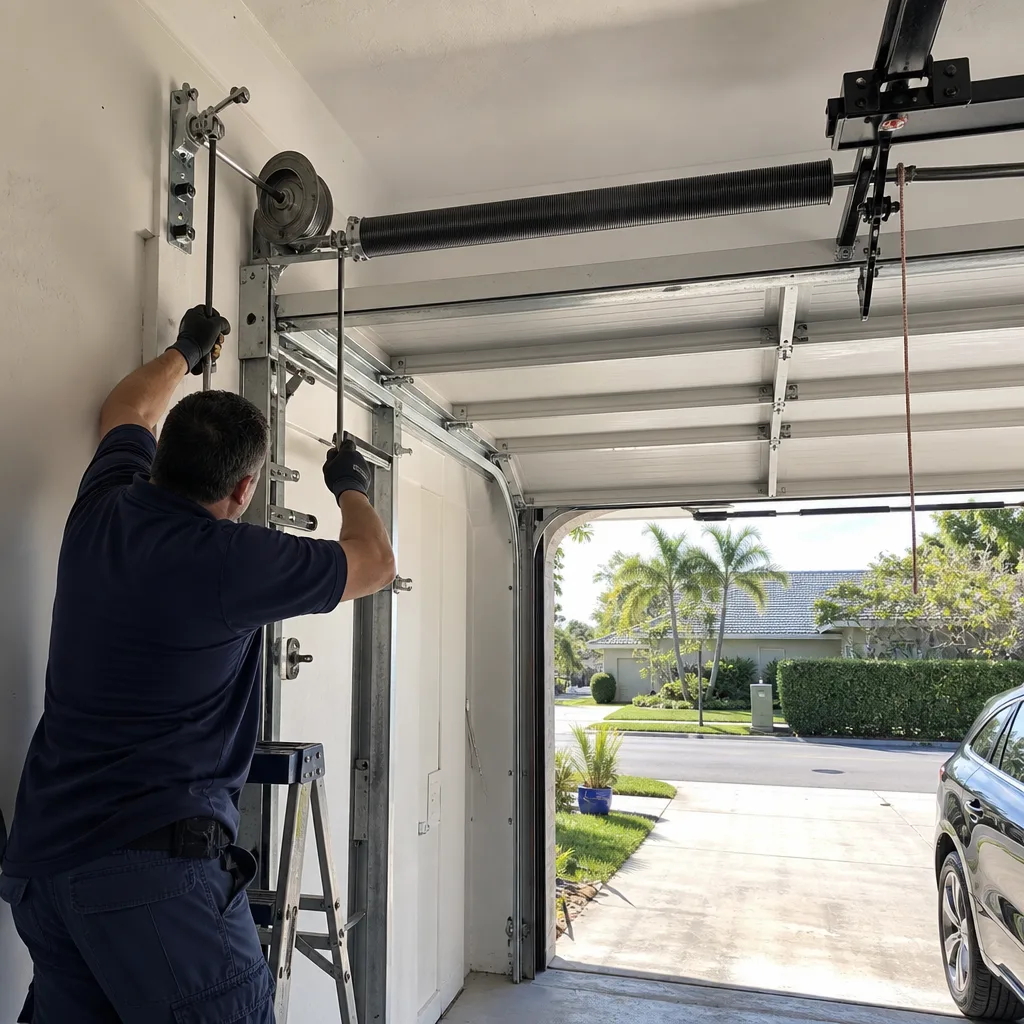
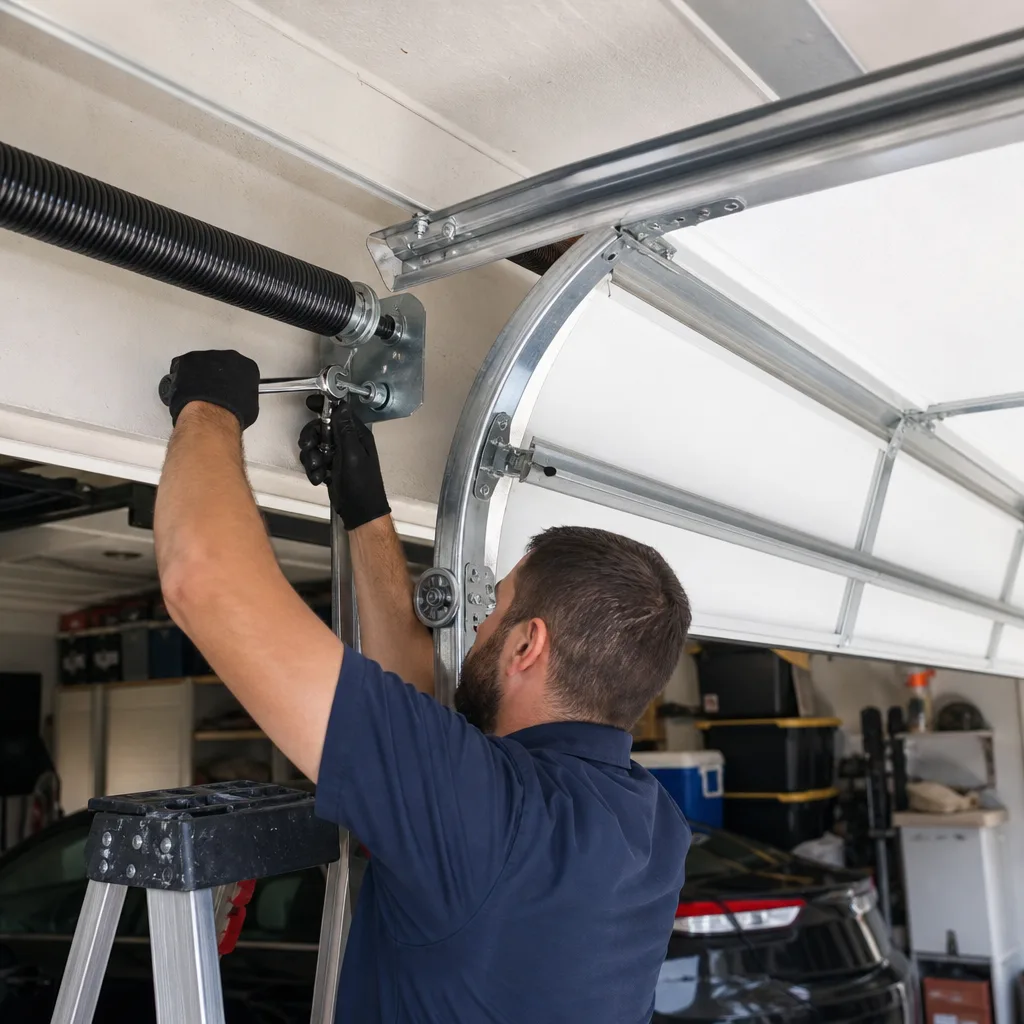
Florida’s licensing statute means a professional taking money for torsion spring work must carry the proper license. That’s a consumer protection, not a formality. When our technician arrives in Boynton Beach for a spring replacement, they carry the license, the insurance, and the specialized winding bars that fit the cone’s four slots. They’ve done this work on the door brands common in this market, including LiftMaster openers paired with Wayne Dalton doors that have their own spring profiles, which take manufacturer-specific knowledge to service safely.
The Cost of DIY Failure: What We See on Service Calls
A DIY repair that goes wrong doesn’t just fail to fix the problem. It usually creates a second problem, and the second problem costs more than the original repair would have. This is consistent across the service calls we run in Boynton Beach, and it’s the strongest argument for drawing the line correctly.
Consider the extension spring cable that slips off the pulley. A homeowner attempting this repair might get the cable back on but leave the door slightly out of level, not noticing until the door rattles on the way up a week later. The original cable repair $140 to $220 on most single-car doors in this market becomes a track realignment plus cable replacement plus roller replacement, often $350 to $500. The homeowner spent three hours and saved nothing.
Or take the torsion spring that a homeowner attempts to rewind. The spring has been stretched, the coils are uneven, and the door now opens unevenly, slamming into the stops on one side. Correcting that means replacing the spring the homeowner tried to salvage, adjusting the cable drums on both sides, and rebalancing the door. The original spring replacement would have been $180 to $340. The corrective work after the DIY attempt runs $400 to $700, and that’s before accounting for any door damage from the uneven operation. For a full breakdown, see our Garage Door Cost Breakdown: The Boynton Beach Homeowner’s Reference for 2026.
The pattern isn’t about homeowner incompetence. It’s about the equipment. A garage door is a structural component that cycles twice a day or more, and its components wear at predictable rates. When a professional replaces a roller, they check the hinge it sits in, the track it rides, and the cable that runs alongside it. A homeowner replaces the roller and stops. Neither approach is wrong. One of them creates more work later.
We offer a Free Second Opinion on any written estimate from another company. Bring us the paperwork, and we’ll walk you through what we see, what we’d do, and what it costs, in writing, before any work starts. That’s the whole point of garage door installation and replacement work done under The Haven Standard: the paper trail is the product. When we correct a DIY repair that went sideways in Boynton Beach, the quote names the failed part, names the correction, and names the price. Nothing hidden.
The Tool Question: What You Need vs. What We Carry
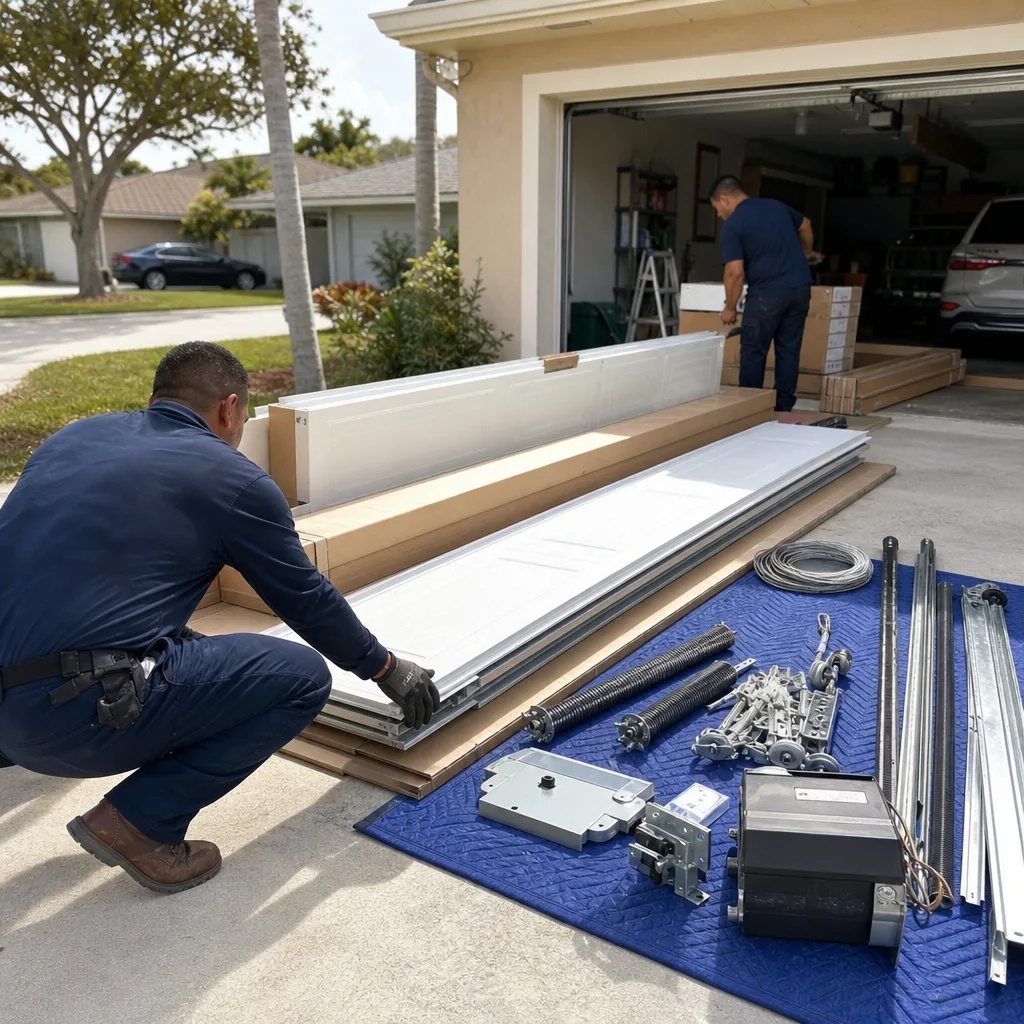
Most DIY garage door tasks fail not from lack of skill but from lack of the right tool. A bottom seal replacement requires nothing more than a utility knife, a flathead screwdriver, and patience. That’s the easy end. A roller replacement on an extension spring system requires a locking pliers, two C-clamps to brace the door, and a crescent wrench. Most homeowners have these. The trouble starts when the task requires winding bars, which are specialized steel rods designed to fit torsion spring winding cones, or when it requires a torque wrench to set a specific tension. At that point the homeowner faces a choice: buy a $90 set of winding bars they’ll use once, or improvise with a screwdriver, which is the single most dangerous improvisation in home repair.
Improvising with a screwdriver on a torsion spring is how emergency rooms see garage door injuries. The screwdriver snaps, the cone releases, and the stored energy hits whatever is holding the tool. We’ve corrected springs that show exactly this failure mode: a cone with a broken screwdriver tip still wedged in the slot, the spring half-wound, the homeowner lucky to have let go in time.
Our technicians carry vehicle-stocked tools specific to the eight major brands we service: LiftMaster, Chamberlain, Genie, Clopay, Amarr, Wayne Dalton, Craftsman, and Raynor. That list matters on the professional side because a Raynor torsion spring has a different cone profile than a Clopay, and a Craftsman opener’s limit switch adjustment differs from a LiftMaster’s. A professional doesn’t just have the tools; they have the right tool for the specific brand on the house. That’s the hidden cost of DIY that most guides don’t mention.
Permits, Insurance Claims, and Home Sales: The Paper Trail Nobody Warns You About
In Boynton Beach, replacing an entire garage door typically requires a building permit, and the city’s permitting process requires either a licensed contractor’s license number or a homeowner-builder permit application for owner-occupied work. The homeowner-builder route exists for a reason: Florida law allows a homeowner to act as their own contractor on their own residence, provided they sign an affidavit swearing the work is for their own use, not for sale or rent. Signing that affidavit carries consequences. If the same homeowner sells the property within a year, the work becomes suspect, and the buyer can come back on the seller for defects that a licensed contractor would have been liable for.
The insurance side is equally concrete. A homeowner whose garage door fails and causes property damage, like a door that falls on a vehicle, needs to demonstrate that the door was properly maintained. If the door’s last service was a DIY spring adjustment that was not correctly done, the insurance adjuster may reduce or deny the claim on the basis of improper maintenance. The homeowner who can produce a service record from a licensed contractor, with the photo record of the work, is on firmer ground. That documentation is exactly what the garage door opener repair and installation team at Servo provides on every visit: a photo record of what was found and what was done, delivered with the written warranty.
Home sales are where the paper trail matters most. In 2023, the Florida Realtors association began flagging unpermitted garage door replacements as a top-five title insurance issue in the state. A buyer’s inspection that reveals a door without a permit record, and an electrical opener that was self-installed, creates a closing delay. The corrective path is to either pull a retroactive permit (which requires a licensed contractor’s inspection) or to negotiate a price reduction. Either way, the seller pays more than the permit would have cost originally. We’re not saying this to scare Boynton Beach sellers. We’re saying it because we’ve been the contractor called to inspect DIY doors before closing, and we’ve written the correction report.
Boynton Beach Climate and Your Garage Door: Why This Market Is Different
Boynton Beach sits in a coastal climate zone that punishes garage doors faster than inland Florida. Salt air accelerates corrosion on steel springs and hardware, sometimes cutting a spring’s service life from ten years to six. Humidity softens wood composite doors and swells them, causing binding at the jambs during the summer months. The afternoon thunderstorms that roll through from May to October bring wind-driven rain that finds every crack in a worn bottom seal. These aren’t abstract conditions; they’re the difference between a garage door that lasts twelve years in Orlando and one that needs spring replacement at year seven in Boynton Beach.
The salt corrosion pattern matters for DIY decisions. A homeowner in Boynton Beach might replace a weatherstrip only to discover the bottom retainer bar has rusted through, requiring a $25 bracket swap in addition to the seal. A homeowner might lubricate their springs and find surface pitting from salt air that they now need to monitor more frequently. The tools for these observations don’t require a professional. The interpretation does. We’ve seen more than one Boynton Beach homeowner assume a noisy door needed lubrication when the real problem was a rusted roller bearing about to seize and derail the door.
We’ve been working on garage doors in Boynton Beach since 2015, and the Servo Garage Doors Boynton Beach home is built on a simple principle: document what we find, quote a written price, and let the evidence speak. That’s the standard we apply to every door in this market, from the HOA communities off Gateway Boulevard to the older ranch homes near the intracoastal.
Common Mistakes to Avoid
- Attempting torsion spring work with improvised tools. A screwdriver or pry bar in a winding cone is the leading cause of garage door injuries. The only safe tool is a proper winding bar, and if you own winding bars, you probably don’t need this guide’s permission to use them.
- Skipping the release handle before starting a repair. The red release cord disconnects the opener from the door. Missing this step means working on a door the opener can move at any moment.
- Using WD-40 on springs and rollers. WD-40 cleans and temporarily lubricates, but it evaporates. Springs need silicone spray; hinges and rollers need white lithium grease. WD-40 on a Boynton Beach door means re-lubricating in six weeks instead of six months.
- Assuming a noisy door needs more lubrication. Noise often comes from a failing roller bearing or a misaligned track. Adding lubricant masks the symptom while the underlying issue worsens.
- Replacing the seal without checking the retainer bar. The seal slides into a metal channel that corrodes first in salt air. A new seal in a rusted retainer is like new paint on rotted wood.
- Ignoring the permit on a full door replacement. Boynton Beach requires permits for structural changes, and that includes a full door replacement. Skipping it creates a title issue down the road.
- Doing electrical work on the opener beyond the basics. Replacing a battery or a remote is safe. Touching the opener’s internal wiring or replacing the logic board crosses into territory where an unlicensed repair can create a fire hazard, and that’s not theoretical in a humidity environment that already stresses electrical components.
When to Call a Professional
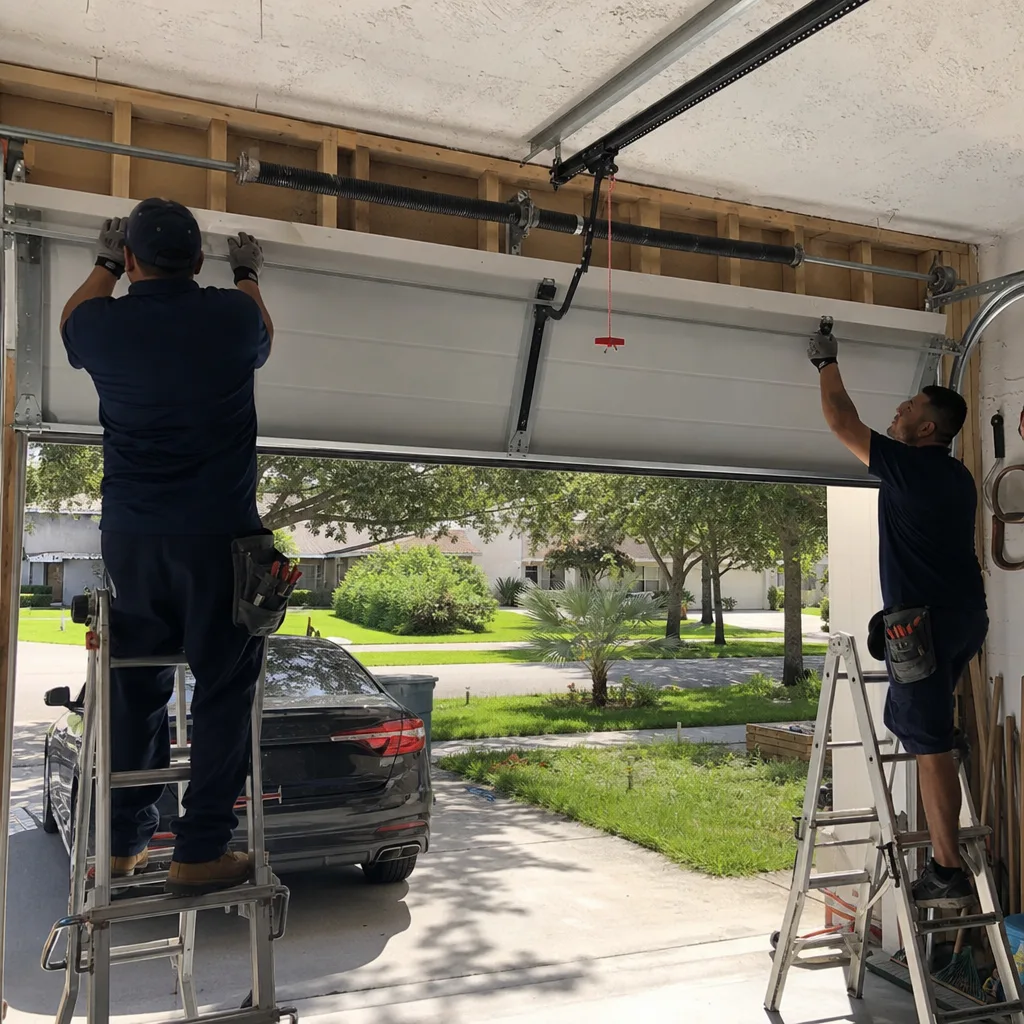
A professional is the right call when the task involves a torsion spring, a cable under tension, a structural component, an electrical issue inside the opener, or a permit. It’s also the right call when you’re not certain, because the cost of a service call in Boynton Beach, typically $75 to $125 for the diagnosis, is cheaper than the cost of a failed repair. For routine upkeep you can handle yourself, use our Garage Door Repair Maintenance Checklist for Boynton Beach Homeowners. The garage door is the largest moving object in your home, and it moves over your car and under your children’s bedrooms. This is not the place to learn by doing. Servo Garage Doors Boynton Beach offers free estimates in Boynton Beach, and we’ll tell you honestly if the task is one you can handle yourself. Call (754) 227-2243 for a straight answer, a written price, and no pressure.
Frequently Asked Questions
Yes, on your own owner-occupied residence, Florida law permits a homeowner to perform their own garage door work, including spring replacement. The legal issue arises when work is done for compensation, meaning on a rental property or for a neighbor, in which case Florida Statute 489.103 requires a licensed contractor. The practical issue is that torsion spring work carries serious injury risk regardless of legality, and most Boynton Beach homeowners are better served by a professional for this specific task.
Torsion spring replacement in Boynton Beach typically costs $180 to $340 for a single-spring residential door and $280 to $500 for a double-spring system, including the springs, labor, and balancing. Cable replacement adds $100 to $180. Every Servo job comes with a written price and written scope before work starts, per Clause 1 of The Haven Standard, so the quote you approve is the price you pay. Call (754) 227-2243 for an exact quote on your door.
Bottom seal replacement, weatherstripping, photo-eye sensor realignment, lubrication, remote battery replacement, and visual inspections are all safe for a careful homeowner with basic tools. These tasks require no permit, carry minimal injury risk, and are hard to do wrong enough to cause damage. Anything involving tensioned springs, cables, structural modifications, or opener wiring belongs with a professional.
It can. If a garage door fails and causes damage, an insurance adjuster may ask for maintenance records. A DIY repair that was not done correctly, especially a spring or cable adjustment, can be grounds for a reduced or denied claim. A documented service record from a licensed contractor, including photos of the work, puts you on stronger ground. We include a documented photo record on every visit for exactly this reason.
Corrective work typically costs $350 to $700, which is often two to three times the original repair would have cost. We’ve corrected misaligned tracks, improperly wound springs, and damaged cable drums on Boynton Beach doors where the homeowner attempted a repair, ran into trouble, and then called us. The original repair would have been $180 to $340 in most cases. We offer a Free Second Opinion on any written estimate, so if you’ve had work done and something feels off, bring us the paperwork and we’ll document what we find.
Yes. Servo services all eight major brands: LiftMaster, Chamberlain, Genie, Clopay, Amarr, Wayne Dalton, Craftsman, and Raynor. Our technicians carry common springs, rollers, cables, sensors, and opener parts stocked by vehicle, so most repairs are completed in one visit with the same brand parts the door was built with.
The Bottom Line
The DIY-versus-professional decision is not about confidence. It’s about category. Bottom seals, lubrication, sensors, and batteries are homeowner work, and doing them well saves money and builds understanding of your home. Torsion springs, cables, structural changes, and electrical work are professional territory by Florida law, by physics, or by both. The cost of a misjudged repair in Boynton Beach runs $350 to $700, not counting the injury risk. When the task crosses the line, call someone who documents what they find, quotes a written price before touching anything, and leaves you with a paper trail. That’s how the work should be done, and that’s how we’ve done it in Boynton Beach since 2015. Call (754) 227-2243 for a free estimate, a straight answer, and a written price on the work your door actually needs.
Written by Marcus Deller, Owner at Servo Garage Doors Boynton Beach, serving Boynton Beach since 2015.