
Last updated September 20, 2026
Full 25-point door and opener safety check with every visit - springs, cables, rollers, tracks, and your LiftMaster or Chamberlain opener included
You get a price before we start. It does not change when the truck arrives.
 Before
 After
After Before
 After
After Before
 After
AfterGarage Door Permits, Codes & Inspections in FL: What You Need to Know
An unpermitted garage door replacement in Florida doesn’t just risk a code citation. It creates a documented gap in your property record that an insurance adjuster can use to deny a wind-damage claim after a hurricane. The permit isn’t paperwork for the contractor’s benefit. It’s the paper trail that proves your door met the wind-load requirements for your specific location, and without it, your insurer’s obligation to cover storm damage gets murky fast. This guide walks through when permits are required in Palm Beach County, what inspectors look for, how to verify a previous owner’s work, and how to fix an installation that never got permitted. We’ve compiled this from current county code, Florida Building Code requirements, and what we see every week at garage doors across Boynton Beach. For Garage Door Warning Signs: A Boynton Beach Homeowner’s Reference Guide, see our companion post.
Quick Answer
A garage door permit is required in Florida any time you replace a garage door with a different size, structural opening, or wind-load rating, and in most Palm Beach County municipalities any full door replacement triggers the requirement regardless of scope. The permit ensures the door meets Florida Product Approval or Miami-Dade NOA standards for your wind zone, and the final inspection creates the record your insurance company will want to see after a storm. If the door is a like-for-like replacement with the same product approval and no structural changes, some jurisdictions exempt it, but the safest reading in Boynton Beach is that most replacements need a permit.
Table of Contents
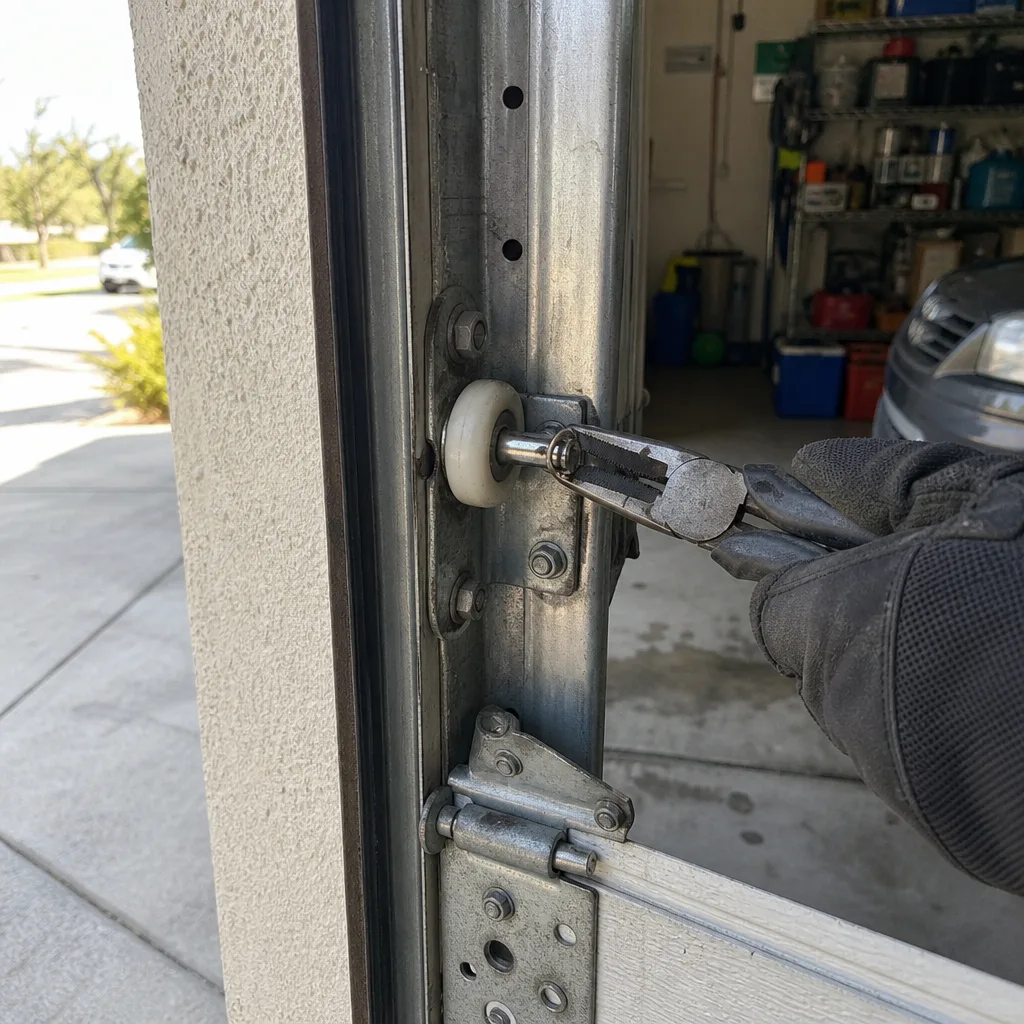
- When a Garage Door Permit Is Required in Florida
- Palm Beach County Specifics: Thresholds and Triggers
- Florida Product Approval vs. Miami-Dade NOA
- What the Final Inspection Covers (and What It Doesn’t)
- How to Check Whether a Previous Owner’s Door Was Permitted
- What Happens When a Contractor Pulls No Permit
- How to Remediate an Unpermitted Installation Legally
- The Insurance Connection: Why Permits Matter After a Hurricane
BeforeAfterWhen a Garage Door Permit Is Required in Florida
Florida Building Code Section 105.1 requires a permit for any work that involves the structural components of a building. A garage door is classified as a structural component because it forms part of the building envelope and carries wind load. That’s the legal frame. In plain terms: if you’re changing what the door is, how it’s anchored, or what opening it fills, you need a permit.
Here’s the practical breakdown of what triggers a permit:
- Replacing a door with a different size or configuration. If the new door is wider, taller, or changes the opening dimensions in any way, the framing changes and the permit is mandatory.
- Converting a single door to a double door. This modifies the structural header above the opening. No exceptions anywhere in Florida.
- Cutting a new garage door opening. This is structural alteration of a load-bearing wall. A permit and an engineer’s review are required.
- Replacing a door with a different wind-load rating. If your old door was rated for 150 mph wind and the new one is rated for 130 mph, that’s a downgrade and it won’t pass code in most of Palm Beach County.
- Like-for-like replacement of a full door assembly. This is the gray zone. Some municipalities exempt it if the door carries the same Florida Product Approval number and the opening is untouched. Others require a permit regardless. Boynton Beach falls into the stricter group for most applications.
We’ve seen homeowners confidently told by a contractor that “you don’t need a permit for a door swap,” only to find out at closing or claim time that the county disagrees. The contractor doesn’t own the risk. The homeowner does.
Key takeaway: If you’re installing a new garage door in Boynton Beach and the size, brand, or wind rating differs from what’s currently on the house, assume you need a permit until the building department says otherwise. Most permit applications cost between $90 and $250 in Palm Beach County. That’s cheap documentation.
Palm Beach County Specifics: Thresholds and Triggers
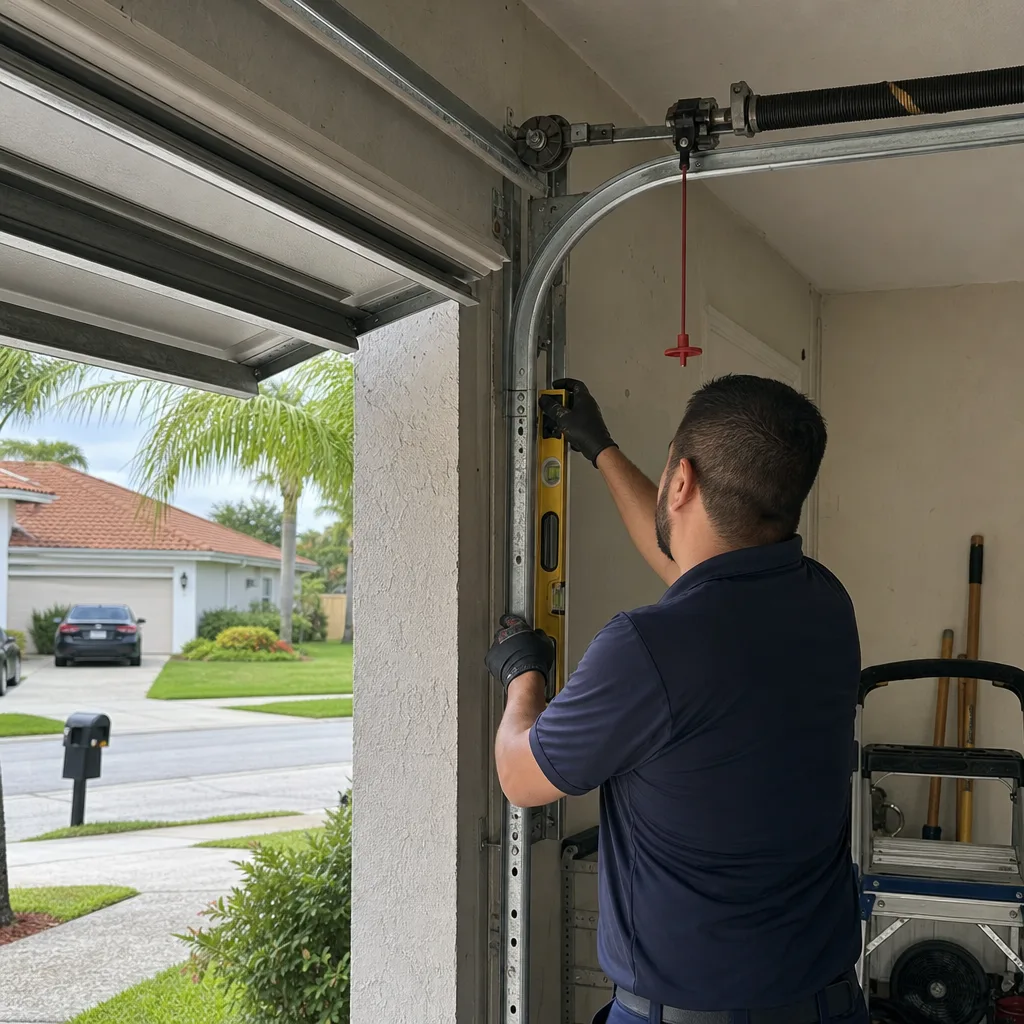
Palm Beach County operates under the Florida Building Code 8th Edition (2023), and the building department has issued specific interpretations for garage door work. The county’s position is that any replacement of an exterior garage door requires a permit when the door is part of the wind-resistance system of the home. Since virtually every attached garage door in Boynton Beach qualifies as part of that system, the practical result is that most replacements require one.
Here’s what the county specifically triggers on:
- Replacement with a different product approval number. If the old Clopay door was approved under FL number 12345 and the new one carries a different approval, the permit verifies the new number meets the wind zone for your street address.
- Replacement of the door and the track system. The track is part of the wind-load assembly. Swapping it changes the anchoring hardware, and anchoring is exactly what fail during a hurricane.
- Any modification to the jamb or header. Even minor framing repairs to accommodate new hardware mean the opening is no longer “in kind.”
- Replacement after hurricane damage. If a storm damaged the old door and you’re replacing it, the insurance claim will hinge on whether the replacement was permitted and inspected. This is non-negotiable.
For Boynton Beach specifically, the city enforces a 2017 update to its local wind-load map that raised the design pressure requirements for some neighborhoods east of I-95. Homes in those zones need doors with higher design pressure ratings, and the permit is how the city verifies the door you bought actually meets that higher bar. A door sold as “hurricane rated” in a showroom doesn’t mean the specific model is approved for your specific address.
Florida Product Approval vs. Miami-Dade NOA
This distinction trips up more Boynton Beach homeowners than any other part of the process. Let’s define both terms plainly.
Florida Product Approval (FPA) is a statewide standard administered by the Florida Department of Business and Professional Regulation. A product with an FPA number has been tested and approved for use anywhere in Florida, including most of Palm Beach County. The test involves air pressure, water penetration, and impact resistance from windborne debris. FPA numbers look like “FL-12345.”
Miami-Dade Notice of Acceptance (NOA) is a stricter standard. Miami-Dade County maintains its own testing protocol, which requires higher design pressures and more stringent impact testing. An NOA number is evidence that the product passed the Miami-Dade tests, which are considered the most rigorous in the country for windborne debris.
Here’s the part most guides miss: some Boynton Beach homes fall within what the Florida Building Code designates as the High Velocity Hurricane Zone (HVHZ), which historically applied only to Miami-Dade and Broward counties. However, certain eastern portions of Palm Beach County, including parts of Boynton Beach near the Intracoastal, are subject to HVHZ-equivalent design pressure requirements because of their exposure to wind coming off the Atlantic. In those zones, an FPA-only product may not be sufficient. The permit office will require either an NOA or an FPA listing that explicitly states HVHZ compliance.
How to verify: every approved door carries a label, usually on the inside of the top section, with the FPA or NOA number printed on it. That number should match what’s listed on your permit application. If the contractor can’t produce the approval number before installation, ask why. At Servo Garage Doors Boynton Beach home, we photograph that label as part of the documentation we hand every customer, so there’s no question what was installed.
What the Final Inspection Covers (and What It Doesn’t)
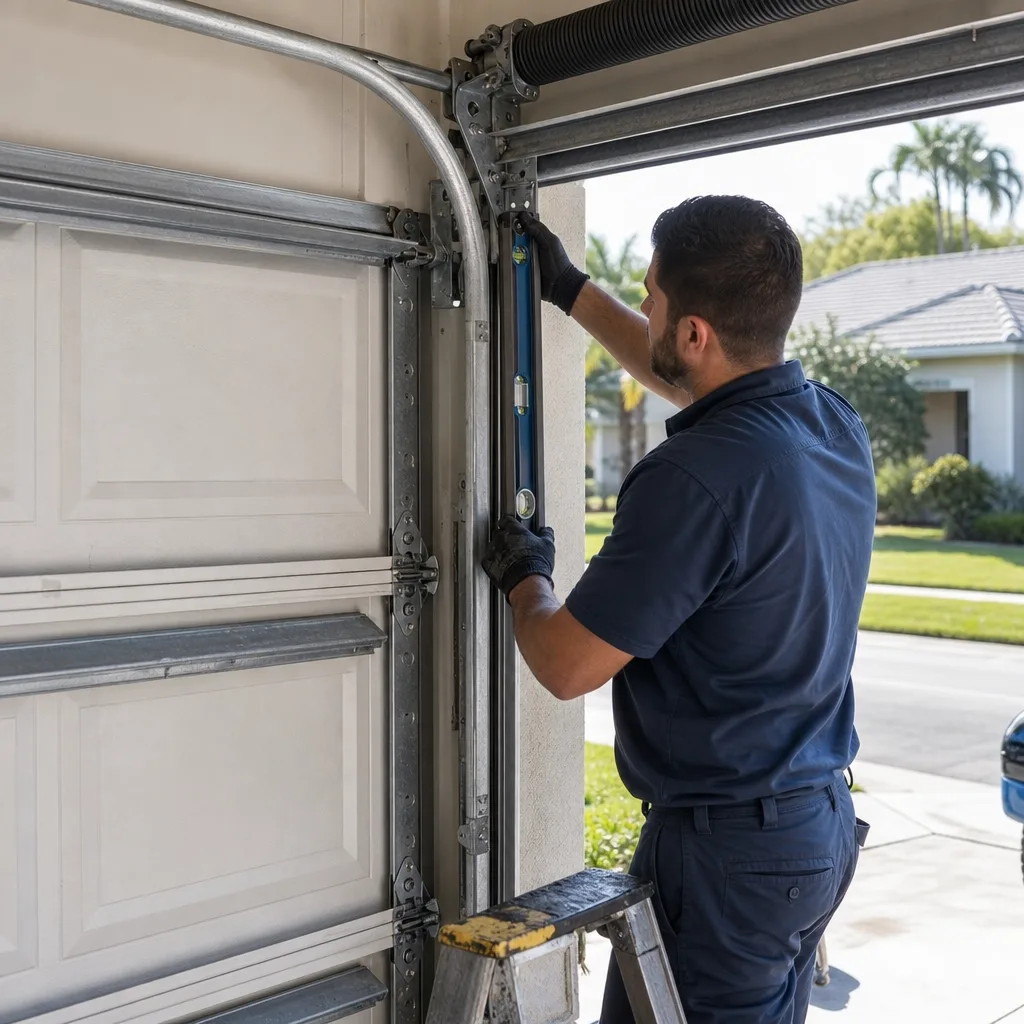
A final inspection for a garage door installation in Palm Beach County typically takes less than 20 minutes. The inspector verifies the door matches the permit documents and that the installation meets the code requirements for wind resistance. Here’s what the inspector checks:
- The product approval label. The FPA or NOA number on the door must match the number listed on the permit.
- Anchoring hardware. The bolts and brackets securing the track and hinges must match the approved anchoring schedule for the wind zone.
- Wind-load reinforcement. If the door section includes reinforcement struts, the inspector verifies they’re installed where the manufacturer specified.
- Proper fitment. The door should close flush against the jamb with no gaps that could let wind pressure build inside the garage.
- Opener safety features. If an opener is part of the installation, the inspector may spot-check the auto-reverse function and the photo-eye sensors.
What the inspection does not cover: the inspector will not evaluate whether the door operates smoothly over time, whether the springs are properly balanced, or whether the opener’s logic board is functioning correctly. Those are mechanical wear items, not code items. A door can pass inspection and still have a spring that fails in six months. That’s why a garage door repair in Boynton Beach should include its own documentation of what was found and what was done, separate from the county inspection.
After the inspection passes, the result is recorded in the county’s permit database. That record is what matters at insurance claim time. Request a copy of the final inspection record and store it with your homeowner’s insurance policy documents. We recommend taking a photo of the inspection tag and emailing it to yourself so there’s a date-stamped copy in your inbox.
How to Check Whether a Previous Owner’s Door Was Permitted
If you bought a Boynton Beach home and noticed the garage door looks newer than the rest of the house, you can verify its permit status in about 10 minutes. The Palm Beach County Building Department maintains a public portal where permits are searchable by address. Here’s the process we walk our customers through:
- Open the Palm Beach County Building Department’s online permit search. Search “Palm Beach County permit search” and select the official county portal.
- Enter your street address. Use the same format that appears on your property tax bill. For Boynton Beach homes, the county portal covers city permits because the city contracts with the county for building services.
- Review the permit history. Look for any permit with a description that mentions “garage door,” “door replacement,” or “wind mitigation.”
- Check the status. A permit that was issued is not the same as a permit that received a final inspection. The record should show a status of “closed” or “final.” An “open” permit is a problem, especially if the work was done years ago.
- If no permit appears. That doesn’t automatically mean the work was unpermitted. Some municipalities didn’t require door permits before certain code updates. Palm Beach County started enforcing garage door permits more strictly around 2010. If the door predates that, the lack of a permit may be grandfathered. If the door was installed in 2018 and there’s no record, you have a documentation gap.
We’ve inspected doors for Boynton Beach homeowners who were preparing to sell and discovered the previous owner’s replacement was never permitted. The fix is straightforward but it’s better to discover it on your schedule instead of during escrow due diligence or a claim.
What Happens When a Contractor Pulls No Permit
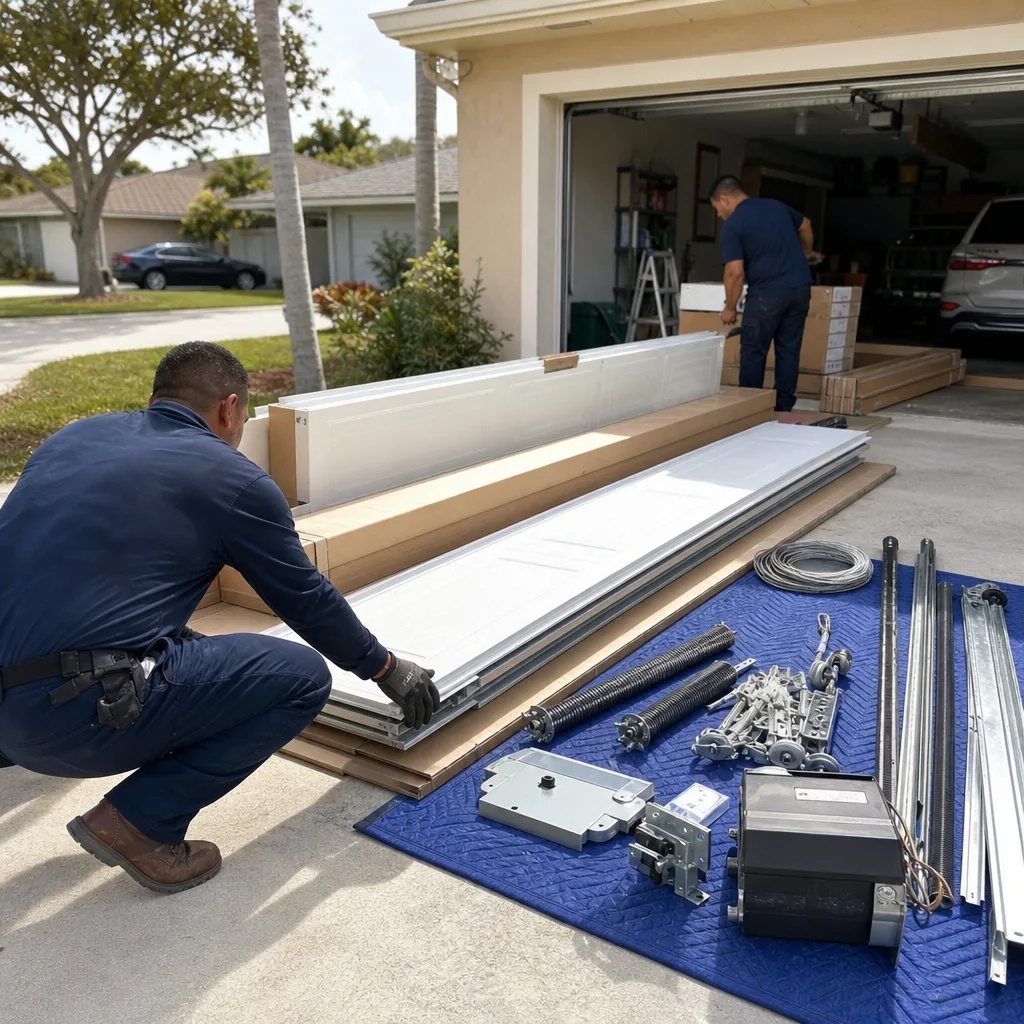
Some contractors will tell you the permit isn’t necessary. It saves them time and a trip to the building department. What they’re really saving is their own paperwork burden at your expense. Here’s what happens when a garage door is installed in Boynton Beach without the required permit:
- Your insurance company can deny a wind-damage claim. If a hurricane damages the unpermitted door, the adjuster will look for the permit record. If there isn’t one, the insurer may assert that the door was not verified to meet the wind-load requirements for your address. This isn’t a hypothetical. We’ve spoken with Boynton Beach homeowners who faced exactly this after Hurricane Nicole.
- Selling the home gets complicated. A buyer’s inspection may flag the unpermitted door, and the title company may require resolution before closing. That resolution is a after-the-fact permit, and by then you’re negotiating from a weak position.
- The county can issue a code compliance notice. Palm Beach County code enforcement can require the homeowner to bring the installation into compliance, which means pulling the permit after the fact and potentially opening up the installation for inspection.
- The contractor has no liability. Without a permit record, there’s no paper trail proving the contractor did the work at all. Your recourse is limited.
The permit protects the homeowner, not the contractor. Any contractor who dismisses the requirement is dismissing your documentation and your insurance position.
How to Remediate an Unpermitted Installation Legally
If you’ve discovered that your garage door was installed without a permit, there’s a defined path to fix it. Palm Beach County offers an after-the-fact permitting process. It’s not punitive. The building department’s primary interest is getting the structure into compliance. Here’s the process:
- Verify the current compliance status. Hire a garage door contractor to inspect the installed door and determine whether it meets the FPA or NOA requirements for your wind zone. If it does, the certification can be submitted as part of the after-the-fact permit application.
- Document the installation. Photograph the product approval label, the anchoring hardware, and the track system. This documentation supports the permit application and becomes part of your permanent record.
- Submit an after-the-fact permit application. The application identifies the work as already completed. The building department will schedule an inspection to verify the installation meets code.
- Correct any deficiencies. If the inspector finds anchoring that doesn’t match the approved schedule or a door that lacks the required wind rating, the work must be brought up to code. In some cases this means replacing the door entirely.
- Close the permit. Once the inspection passes, the permit status changes to “closed” and you have the record you need for insurance and resale purposes.
The after-the-fact permit typically costs more than a normal permit. Palm Beach County’s fee schedule includes an administrative surcharge for work completed without prior approval. Expect the total to run between $200 and $400 for a standard single-door application, not including any corrective work. That’s still far cheaper than fighting an insurance denial.
We helped a Boynton Beach homeowner in the Chapel Hill neighborhood through this process in 2024. The previous homeowner had installed a Chamberlain door without a permit. The door itself was compliant, but the anchoring used generic hardware that didn’t match the approved schedule. We reinstalled the anchoring, photographed everything, and the after-the-fact permit closed within three weeks. The homeowner’s insurance policy was updated with the permit record, and the property sold without issue the following year.
The Insurance Connection: Why Permits Matter After a Hurricane
Florida’s property insurance market is among the most restrictive in the nation. Carriers have narrowed coverage for wind damage, raised deductibles, and in some cases left the state entirely. In that environment, documentation is the homeowner’s only leverage. Here’s how a permit affects an insurance claim:
- A permitted and inspected door is verified by the county. The permit record confirms the door met the wind-load requirements for the address at the time of installation. When the adjuster arrives after a storm, there’s no question about whether the door was compliant.
- An unpermitted door creates a coverage defense. Insurers can argue that the damage was caused or worsened by non-compliant work. Even if the door performed adequately, the absence of a permit record gives the adjuster an opening to question the entire claim.
- Wind mitigation credits depend on documentation. Many Florida insurers offer premium discounts for wind mitigation features, including hurricane-rated garage doors. The insurance company’s wind mitigation inspector will look for the product approval label and may ask for the permit record. No permit, no credit in some cases.
- The permit is retroactive proof. A door installed five years ago with a closed permit is just as documented as one installed last month. The key is that the record exists in the county database.
For Boynton Beach homeowners east of Federal Highway, the insurance stakes are higher. Those homes carry the highest wind exposure in the city, and insurers scrutinize hurricane-rated features on those claims. If your garage door faces the Atlantic, your permit file is not optional paperwork. It’s the difference between a paid claim and a denial letter.
Common Mistakes to Avoid
- Trusting a verbal assurance that “no permit is needed.” The contractor’s confidence is not the county’s position. Get the determination in writing from the building department or insist the contractor pull the permit. If they resist, that’s an answer.
- Accepting an open permit as if it were closed. An issued permit that never received a final inspection is not a completed record. Check the status in the county portal. An open permit is a pending liability.
- Storing the permit record in a file cabinet you’ll never look at again. Date-stamp a digital copy and keep it with your insurance policy. When the storm hits, you’ll want the record in the same folder as your policy number.
- Replacing a hurricane-rated door with a cheaper, non-rated door. Some homeowners do this to save money, not realizing they’ve downgraded the wind-resistance of their home and voided the documentation trail that gave them insurance credits. A Genie opener on a non-rated door doesn’t make the door compliant.
- Assuming the title company caught the missing permit at closing. Title companies review what they’re asked to review. A garage door permit rarely appears on a closing checklist. The gap can go unnoticed for years, then surface at the worst possible moment.
- Doing the work yourself and skipping the permit because it’s “just a door.” Florida Building Code applies to the homeowner just as it does to a contractor. A DIY installation without a permit creates the same insurance gap as an unpermitted contractor job, and you don’t even have a contractor to call back.
- Assuming the product approval label is enough without the permit. The label proves what the door is. The permit proves it was verified for your address. Insurance companies want both.
When to Call a Professional
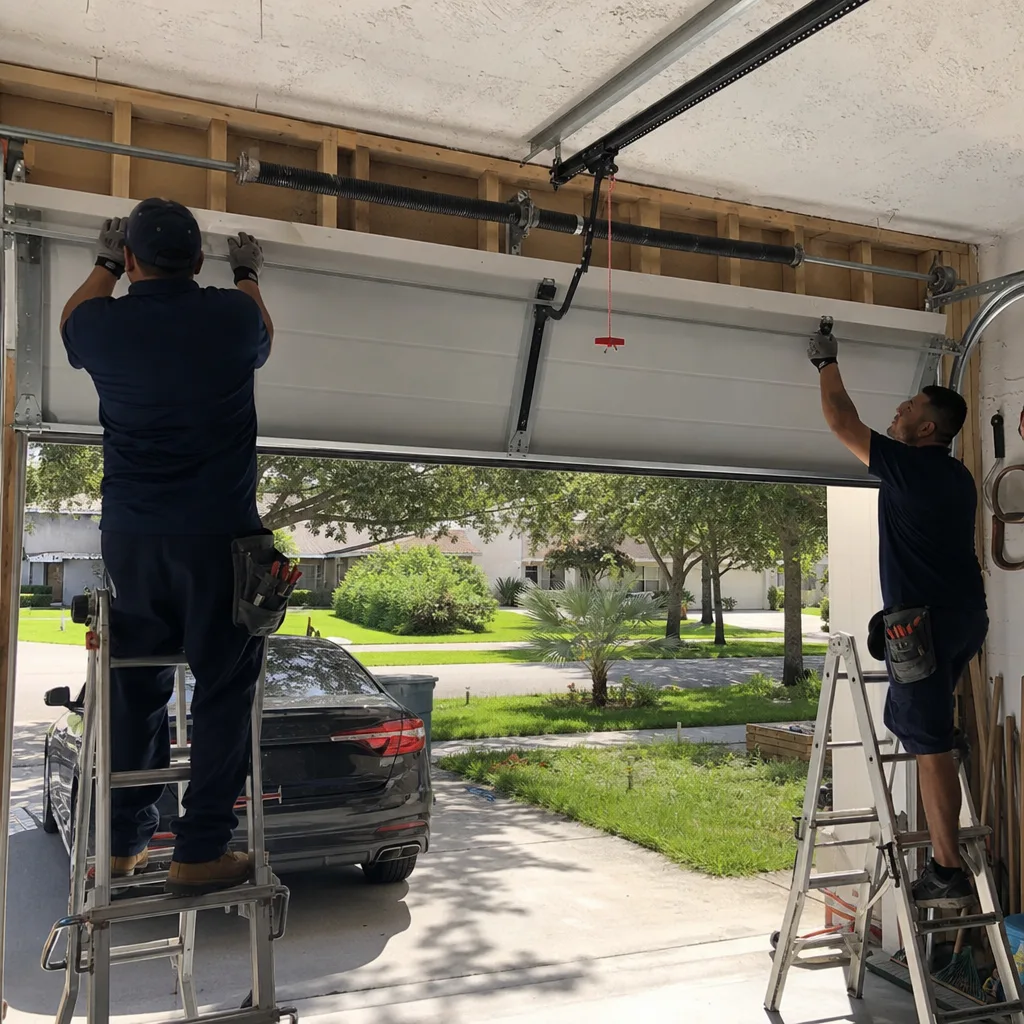
If you’re pulling a permit, arranging an after-the-fact filing, or need a door that meets a specific wind-load rating for your Boynton Beach address, a licensed garage door contractor can handle the product approval verification, the permit application, and the inspection scheduling. You can do some of this yourself, but the documentation has to be right. If you’re replacing a hurricane-rated door, the stakes are higher than a typical spring repair. At Servo Garage Doors Boynton Beach, every installation includes verification of the FPA or NOA number for your wind zone, documented before work begins. We photograph the approval label and include it in the record we hand you when the job is done. If you need a garage door opener repair in Boynton Beach or a full door replacement, call (754) 227-2243 for a free estimate. Written price before any work starts. Always.
Frequently Asked Questions
In most cases, yes. Palm Beach County requires a permit for any garage door replacement that involves a different size, a different product approval number, or any modification to the framing. Like-for-like replacements with the same approval number may be exempt in some cases, but Boynton Beach’s wind-load requirements make the stricter interpretation the safer path. Call the building department or ask your contractor to confirm in writing before work begins.
Expect to pay between $90 and $250 for a standard single-door garage door permit in Palm Beach County, depending on the scope. After-the-fact permits run higher, typically $200 to $400, because of the administrative surcharge for work completed without prior approval. The permit fee is separate from any contractor fees for the installation itself.
A Florida Product Approval (FPA) is a statewide standard that allows a garage door to be installed anywhere in Florida. A Miami-Dade Notice of Acceptance (NOA) is a stricter standard with higher design pressure and impact testing requirements. Some Boynton Beach homes east of I-95 or near the Intracoastal are subject to HVHZ-equivalent requirements that may demand an NOA or an FPA with explicit HVHZ compliance. Check your address’s wind zone before purchasing a door.
Yes. Palm Beach County’s building department portal allows you to search permits by street address. Look for any permit mentioning “garage door” or “door replacement” and verify the status reads “closed” or “final.” If the door was installed in the last decade and no permit appears, you likely have a documentation gap. Call (754) 227-2243 if you’d like us to help you interpret what you find.
Your insurance company may deny the wind-damage claim. The adjuster will look for the permit record in the county database. If none exists, the insurer can argue that the door’s compliance with wind-load requirements was never verified, which gives them a basis to deny or reduce the claim. This is why remediation before a storm is worth the cost.
Hire a licensed contractor to inspect the door and verify it meets FPA or NOA requirements for your address. Then submit an after-the-fact permit application through Palm Beach County’s building department. An inspector will verify the installation. If the door or anchoring fails the inspection, the work must be brought up to code before the permit can close. The process works, but it’s easier before a claim or a sale forces your hand.
The Bottom Line
A garage door permit in Florida is not a regulatory nuisance. It’s the document that proves your door can stand up to the wind your house was designed for, and it’s the record your insurance company will request when you need them most. The cost is modest, the process is routine, and the alternative is a claim denial you can’t reverse. If you’re in Boynton Beach, check your permit status now. If you’re replacing a door, make sure the contractor pulls the permit and that you receive a copy of the final inspection record. If you’re not sure where to start, explore more guides & resources or reach out-that’s what we do.
Written by Marcus Deller, Owner at Servo Garage Doors Boynton Beach, serving Boynton Beach since 2015.