
Last updated September 20, 2026
Full 25-point door and opener safety check with every visit - springs, cables, rollers, tracks, and your LiftMaster or Chamberlain opener included
You get a price before we start. It does not change when the truck arrives.
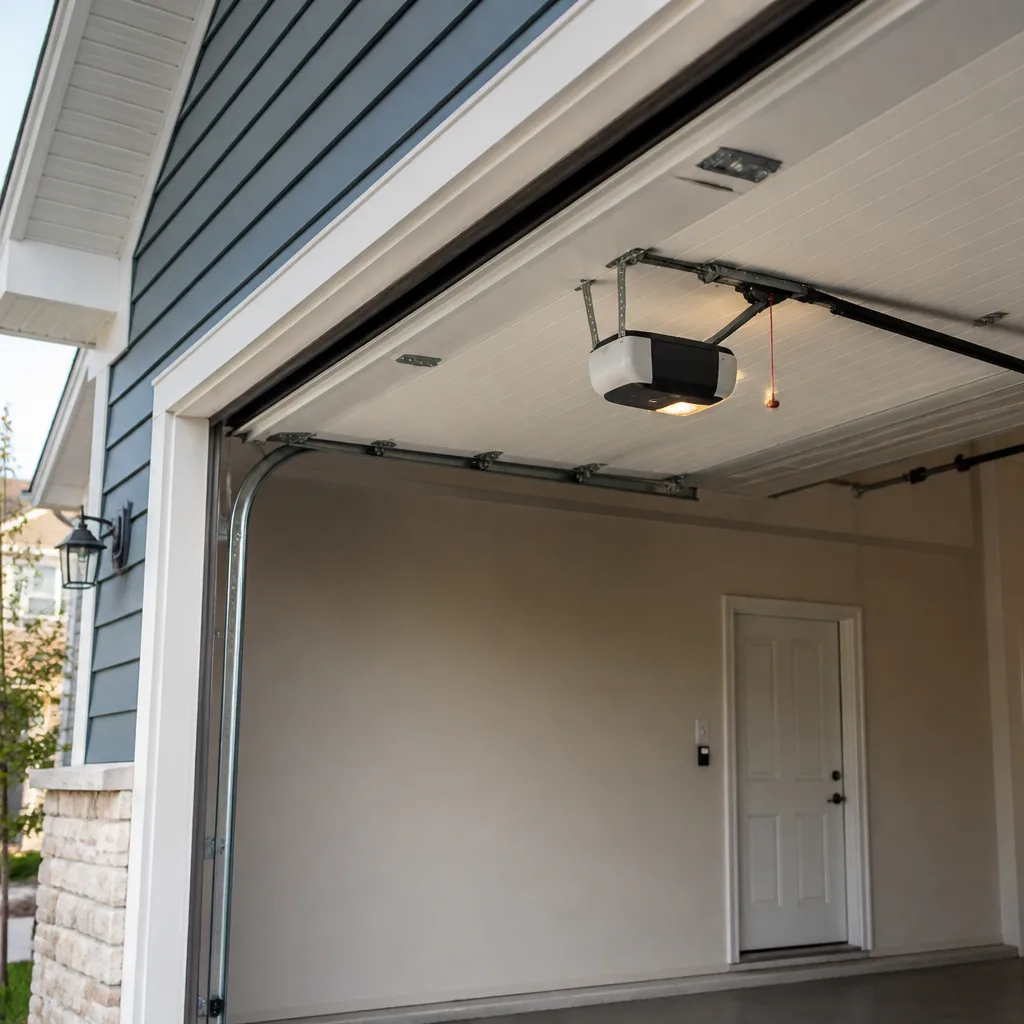
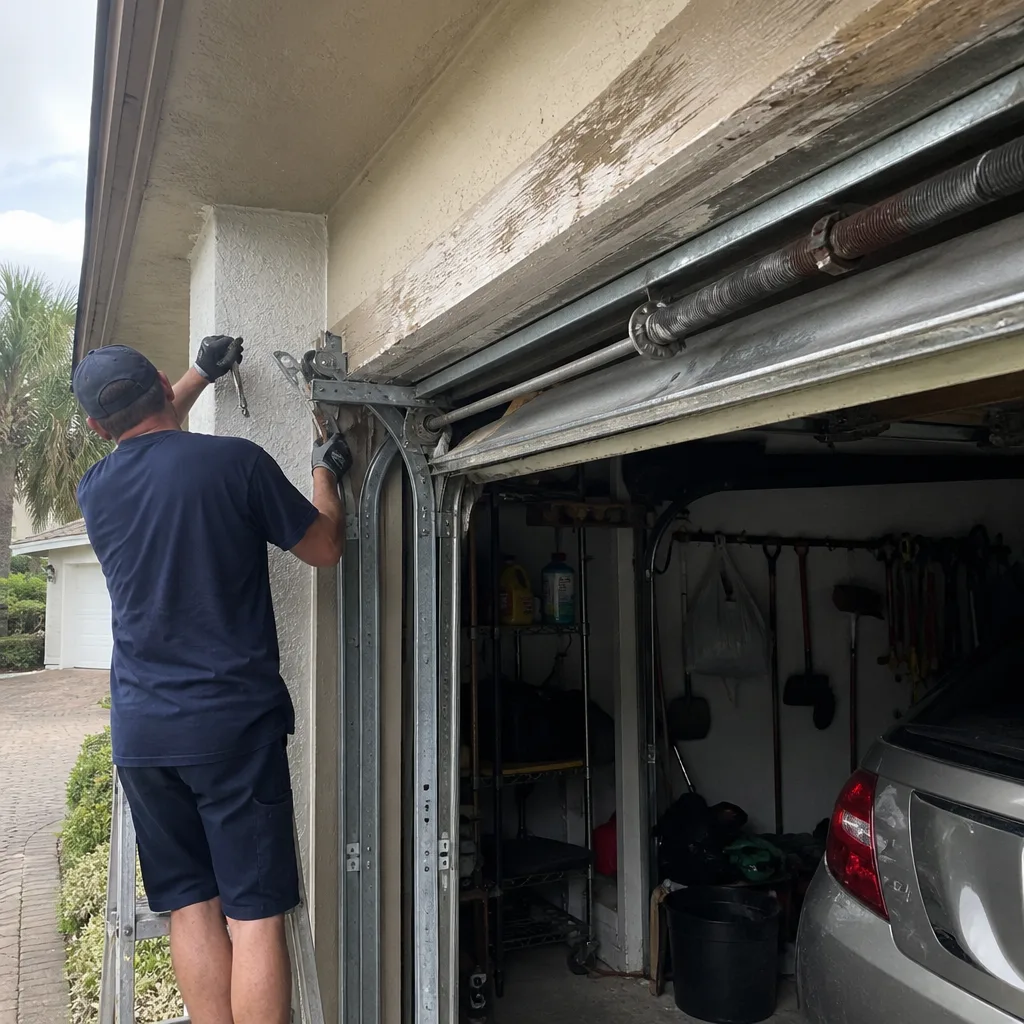 Before
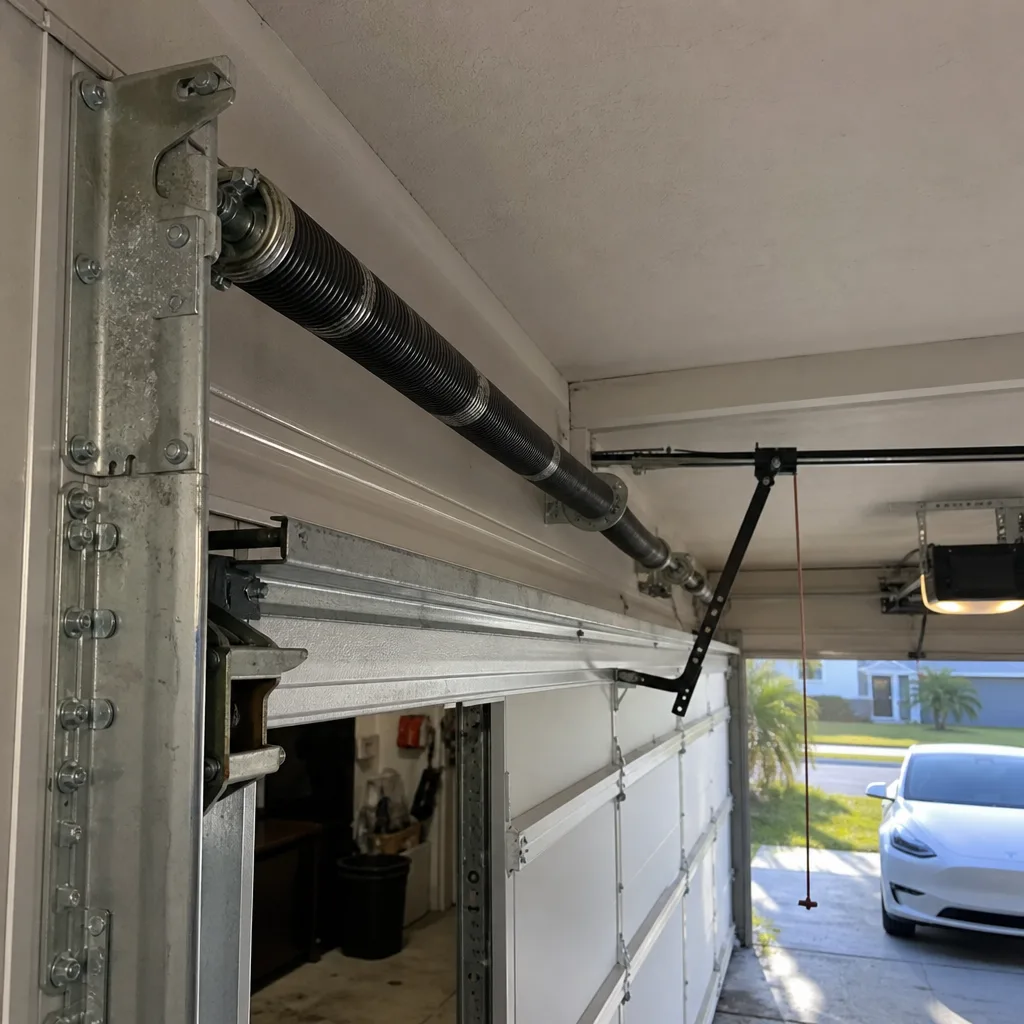 After
After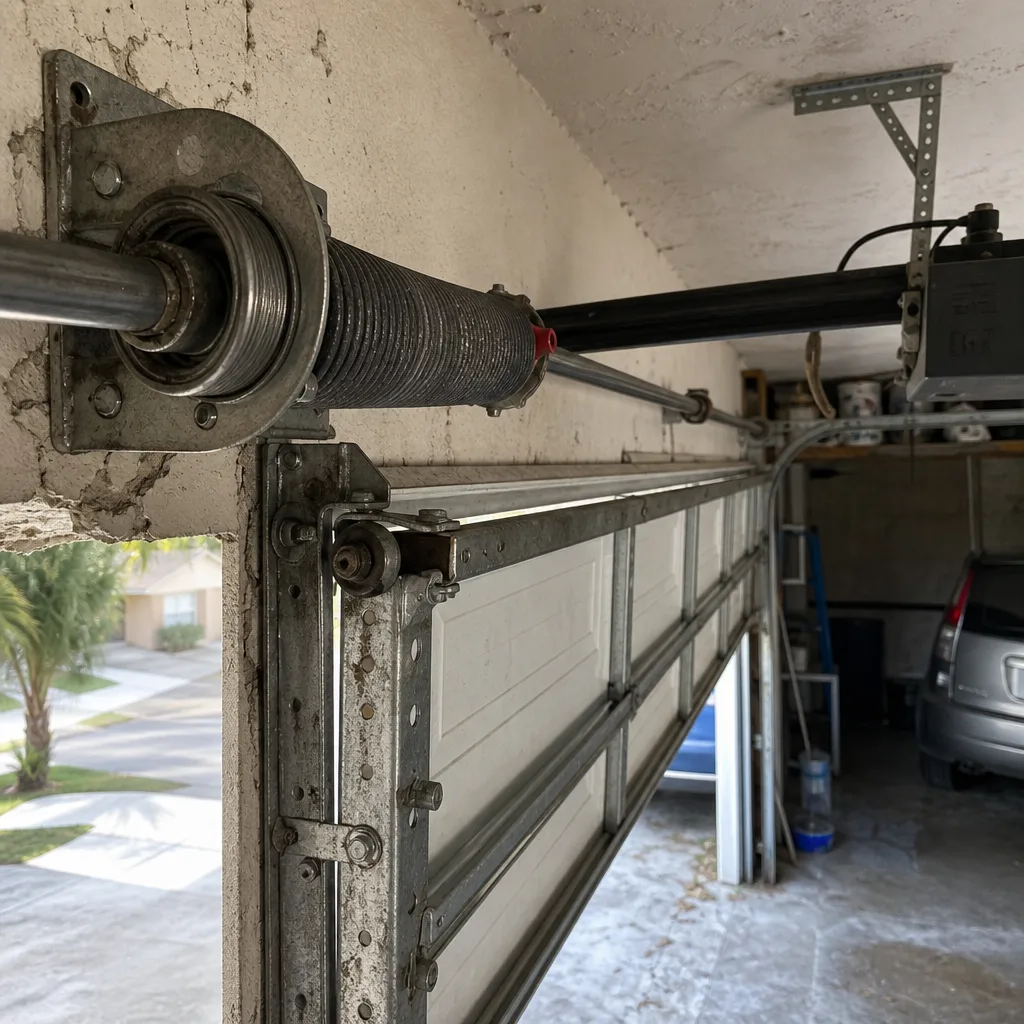 Before
 After
After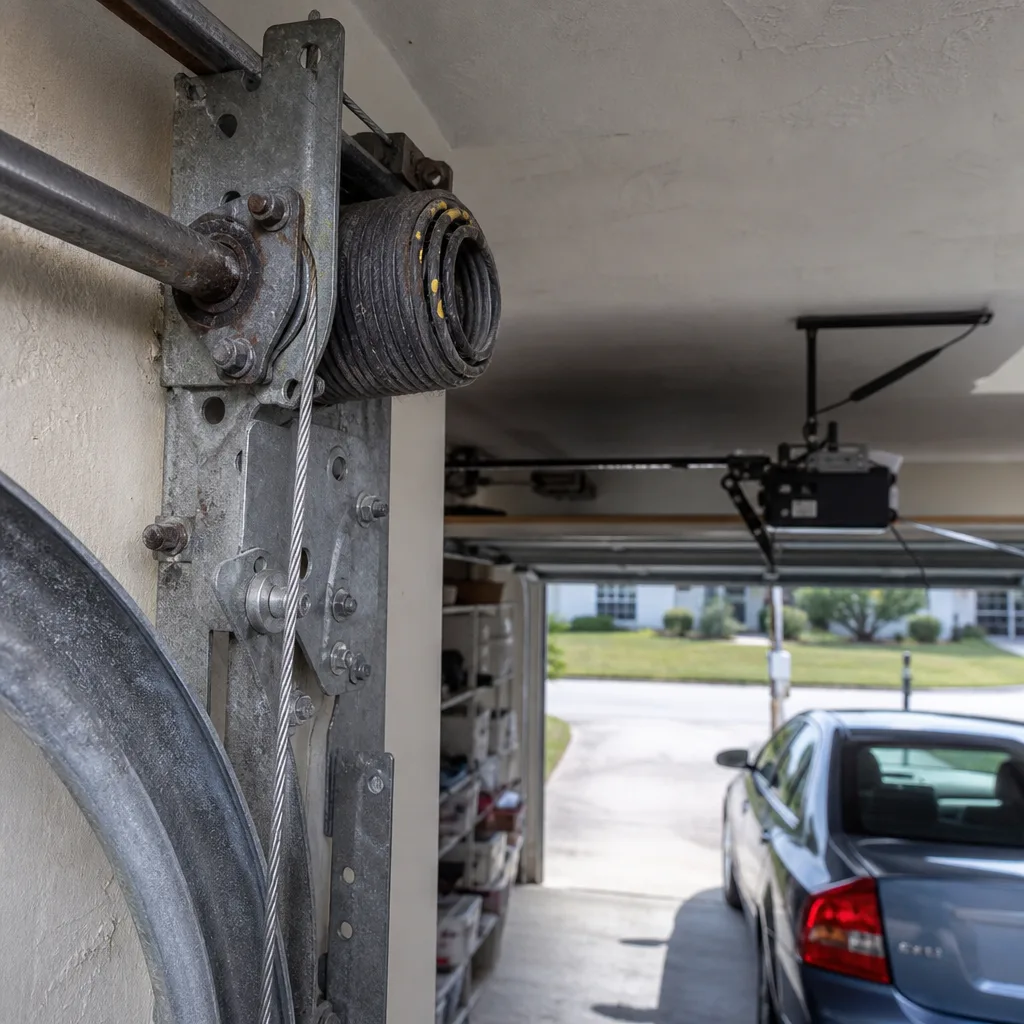 Before
 After
AfterGarage Door Warning Signs: A Boynton Beach Homeowner’s Reference Guide
A garage door that hesitates on the way up and moves normally on the way down is almost always a torsion spring losing tension, not a failing opener and not a track obstruction. The distinction saves several hundred dollars if you know it before someone quotes you an opener replacement. This guide works backward from the symptom to the specific component most likely failing in Boynton Beach’s coastal environment, so you can name what’s wrong before the technician arrives. For a broader overview, see The Complete Guide to Garage Door in Boynton Beach. We’ll cover which signs mean stop using the door today, which ones can wait, what each repair should cost in this market, and how to document what you’re seeing so you don’t pay for diagnosis twice.
Quick Answer
The most common garage door warning signs in Boynton Beach are a door that hesitates on the way up (failing torsion spring), grinding or squealing during operation (rust-seized rollers or worn bearings), cables that look frayed or slack, a door that sits crooked in the opening, and an opener that runs but the door barely moves. Any visible cable fraying, a broken spring, or a door that drops when released from the opener is a safety-critical failure requiring immediate stop-use and a professional service call. Most component-level repairs in Boynton Beach run $125 to $380, with written pricing quoted before any work begins.
Table of Contents
- The Symptom-to-Component Reference for Boynton Beach
- Safety-Critical Signs: Stop Using the Door Today
- How Boynton Beach’s Coastal Humidity Creates False Alarms
- How to Photograph a Warning Sign for a Remote Diagnosis
- Warning Signs After a Storm: The Insurance Documentation Sequence
- What Different Garage Door Noises Actually Mean
- What Warning-Sign Repairs Cost in Boynton Beach
- Common Mistakes to Avoid
- When to Call a Professional
- Frequently Asked Questions
- The Bottom Line
BeforeAfterThe Symptom-to-Component Reference for Boynton Beach
Most warning sign lists stop at “the door is slow” or “it makes noise.” Those descriptions are so broad they could apply to a dozen different failure modes with a threefold cost variance between them. A slow door could be a $40 sensor alignment or a $280 torsion spring, and the difference is observable in about ninety seconds if you know what to look for. Here is the reference we use when homeowners in Boynton Beach call and describe what they’re seeing. Each symptom maps to the component most likely responsible in South Florida’s specific environment.
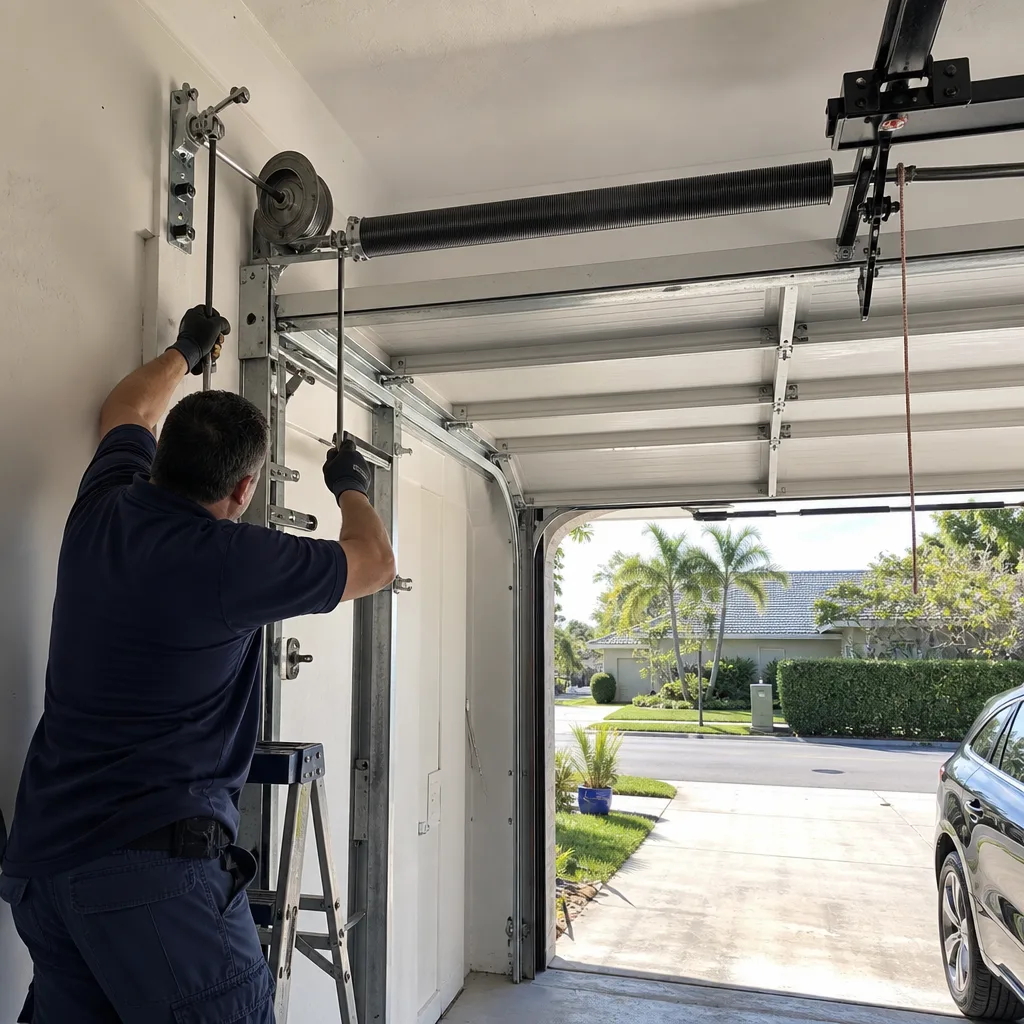
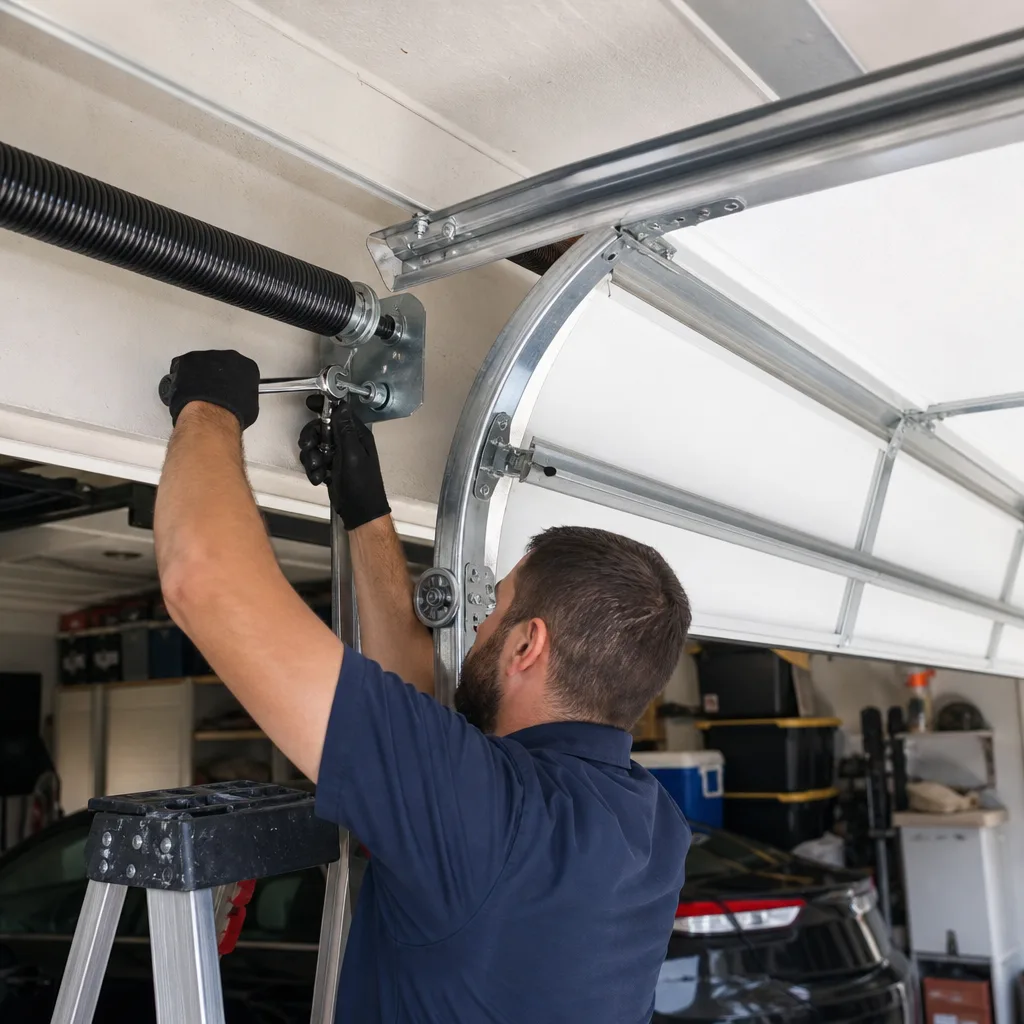
- Door hesitates or pauses on the way up, smooth on the way down: Torsion spring losing tension. In Boynton Beach’s humidity, springs corrode faster than inland, and a spring that measures under factory coil spacing is done. Repair range: $180 to $340 including the spring and labor.
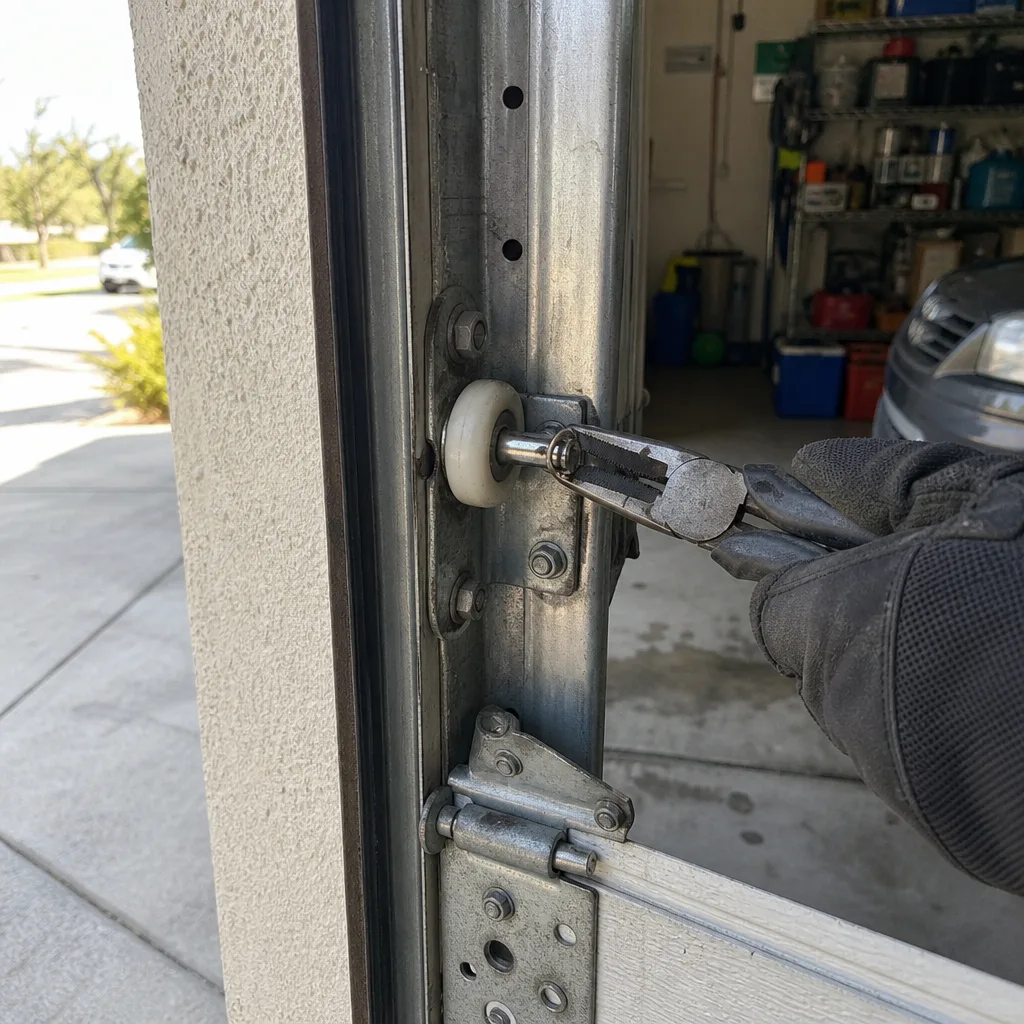
- Grinding or metal-on-metal sound during travel: Rust-seized rollers or dry bearings in the roller stems. Coastal air accelerates this significantly. If lubrication quiets it temporarily but it returns within weeks, the rollers are pitted and need replacement. Range: $95 to $180 for a full roller swap.
- Door jerks or shudders in one spot every cycle: A bent track section or a roller that’s no longer round. If the jerking stops when the door passes a certain point, the track is the problem, not the opener. Range: $110 to $225 for track realignment.
- Cables look slack when the door is fully open: This is a warning sign of spring failure in progress. Cables go slack because the spring is no longer carrying its half of the load. This is a stop-use condition. Range: bundled with spring replacement.
- Opener runs but the door moves slowly or not at all: If the door moves fine by hand when released from the opener, the problem is the opener’s drive gear, not the door. If it’s heavy by hand, the spring has failed and the opener is being asked to lift the full door weight, which will destroy the opener’s gears in weeks. Distinguishing these two takes under a minute and prevents an unnecessary opener replacement.
- Door sits crooked in the opening when closed: One cable has stretched, or one spring has lost tension while the other hasn’t. This is common in Boynton Beach where one side of a door faces prevailing weather more than the other. Range: $160 to $300 depending on whether one or both springs are replaced.
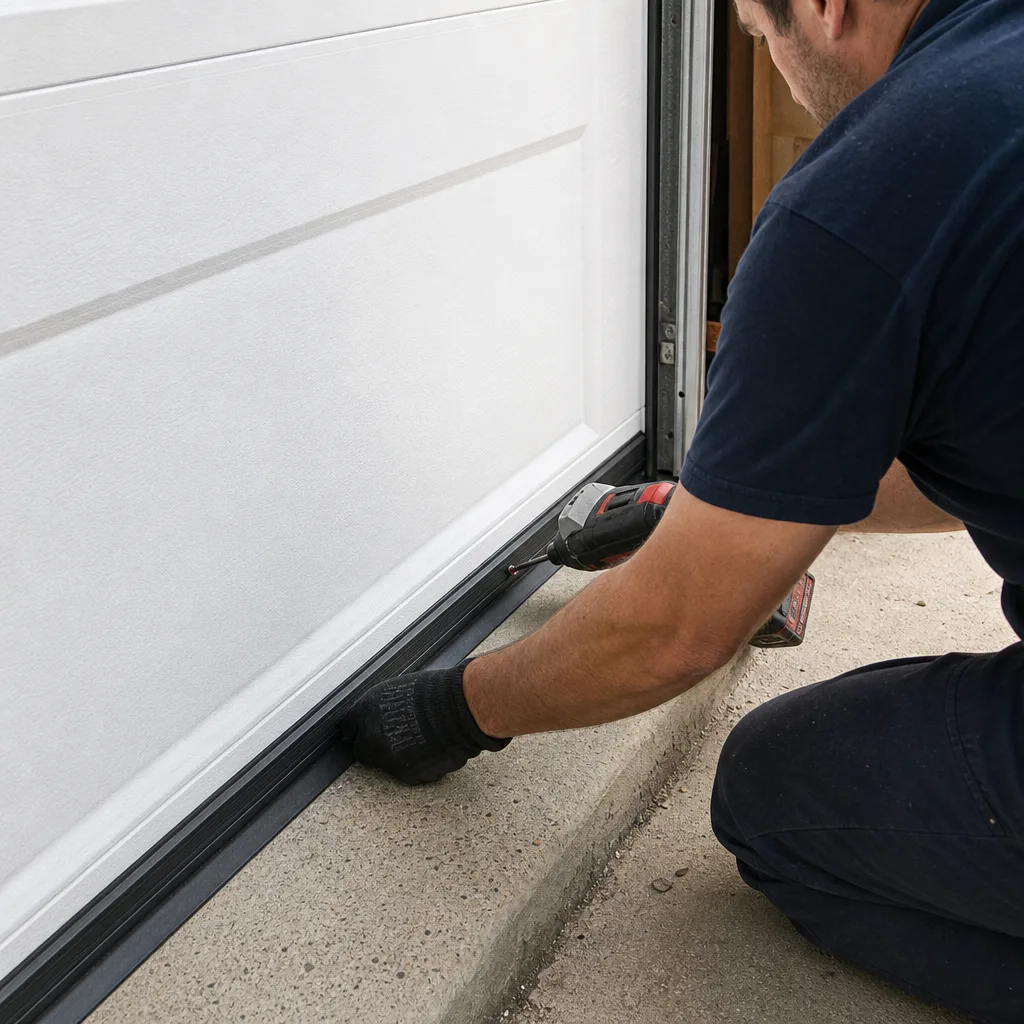
- Bottom edge of the door shows daylight or water streaks into the garage: Corroded or compressed bottom seal. After a Boynton Beach rainy season, rubber seals lose flexibility and start letting standing water under the door. Range: $65 to $120 for seal replacement.
Naming the component before you call changes the conversation. Instead of “my garage door is acting up,” you can say “I have a torsion spring losing tension on one side and the cable is starting to slack.” That specificity is what gets you an accurate price over the phone instead of a vague estimate range.
Safety-Critical Signs: Stop Using the Door Today
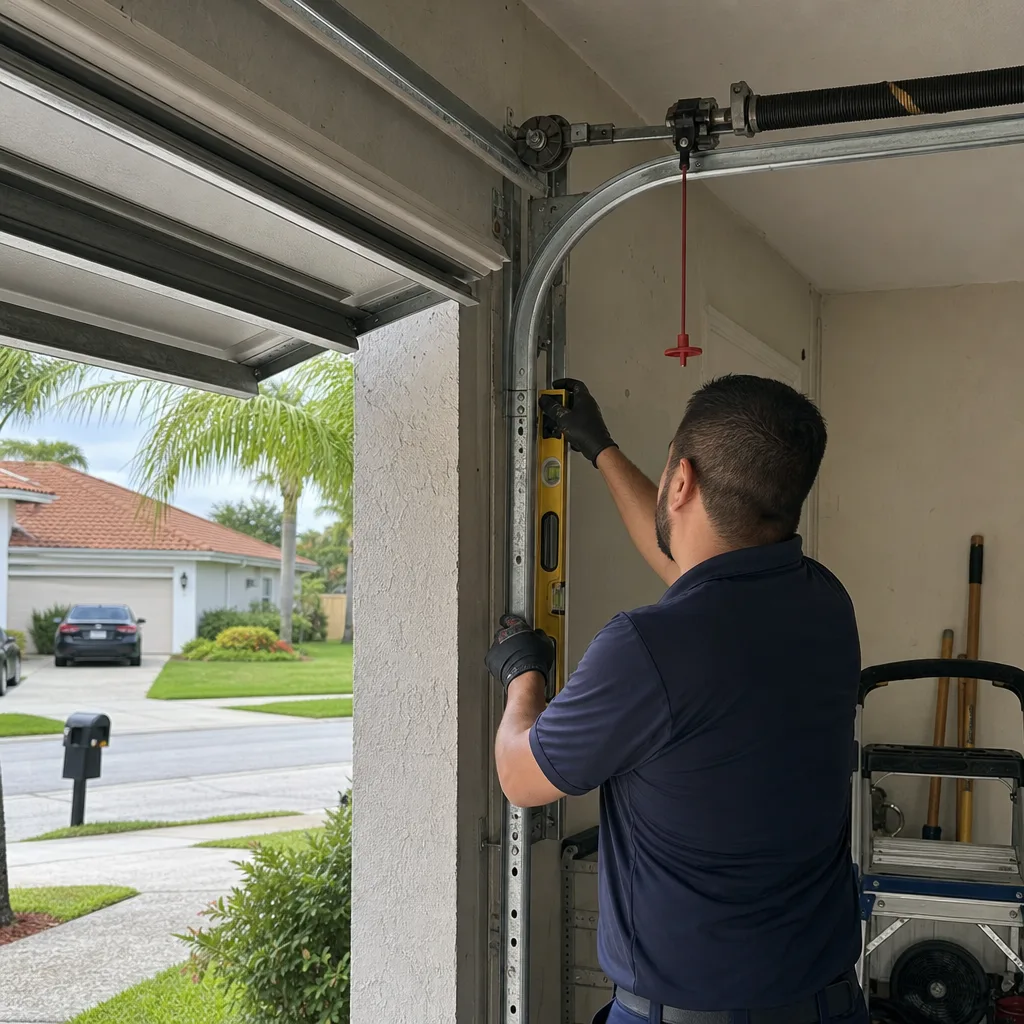
Some warning signs are performance annoyances you can schedule around. Others mean the door is holding load on components that have already failed or are about to. A torsion spring under tension stores enough energy to cause serious injury if it lets go. When these signs are present, stop using the door, unplug the opener if you can reach the cord safely, and keep vehicles and people out from under the door’s path.
- A visible gap in the torsion spring coil: The spring is broken. It can no longer counterbalance the door. If you continue cycling the door, the opener will strain against the full weight of a door it was never designed to lift. The door can also drop without warning if a cable slips off a drum.
- Frayed or unraveling lift cable: Cables work in pairs. When one starts to shred, the other is carrying nearly the full door weight. When the cable lets go, that corner of the door drops, usually with the full weight of the panel behind it. This is not a wait-and-see item.
- A cracked or visibly bending bottom bracket: These brackets anchor the cables to the door. A crack here means the cable’s anchor point is failing. The failure mode is sudden and violent. Replace the bracket before cycling the door again.
- A door that drops hard when released from the opener: Pull the red release cord so the door operates by hand. If it falls with noticeable speed instead of lowering smoothly, the spring is not carrying its load. The door is dangerous and will only get heavier in the weeks that follow.
- Mounting bolts backing out of the spring anchor plate: If you can see the bolt heads separating from the plate above the door, the spring assembly is shifting under tension. This is a sign that the spring is about to fail or that the plate was never bolted to structure properly.
In Boynton Beach, we replace torsion springs year-round. There’s no seasonal garage door season here the way there is for HVAC. The salt air operates on springs continuously, and we routinely see springs fatigue out at the eight-to-ten-year mark in coastal neighborhoods like Leisureville, Chapel Hill, and anywhere within two miles of the Intracoastal. If you’re on that timeline and hearing any of the symptoms above, assume the spring is telling you something specific.
How Boynton Beach’s Coastal Humidity Creates False Alarms
Not every warning sign points at the component it seems to. Boynton Beach’s climate produces failure modes that masquerade as something more expensive. Here are the three false alarms we see most often in this area, and what’s actually happening behind them.
False alarm one: “My opener is losing power.” A Genie or LiftMaster opener that strains, runs slowly, or trips its force limit is often blamed on the motor. In Boynton Beach, what’s actually happening is the rollers have rusted onto their stems. The door now drags, so the opener draws more current and trips its safety limit. The fix is a roller replacement at $95 to $180, not an opener replacement at $300 to $500. We check the door’s balance by hand before ever recommending an opener swap. See our Garage Door Opener Repair & Installation in Boynton Beach page for more on the difference between door problems and opener problems.
False alarm two: “The safety sensors keep tripping for no reason.” The photo eyes at the bottom of the track will reverse the door if their beam is interrupted. In coastal Boynton Beach, a corroded bottom seal lets water wick up under the door and move the sensor brackets just enough to break the beam. The sensor isn’t bad. The seal is. A homeowner who replaces the sensors will have the same problem within weeks. A homeowner who replaces the $65 to $120 bottom seal solves it permanently.
False alarm three: “The door doesn’t sit flush on one side.” On a Chamberlain or LiftMaster opener, the force limit can be set so tightly that the door reverses before fully seating on the slab. But if one side of the door has always had a small gap, check whether the concrete slab itself has shifted. Boynton Beach sits on a high water table, and slab movement is common enough that a half-inch gap on the south side of the door may not be a door problem at all. The fix is a new bottom seal with a little more compliance, not a rail adjustment.
Each of these is an example of the coastal environment creating a symptom that points one way but costs another way to fix. We’ve walked into Boynton Beach garages where a homeowner had already bought a new opener based on the grinding sound alone, when the actual problem was $120 worth of rollers.
How to Photograph a Warning Sign for a Remote Diagnosis
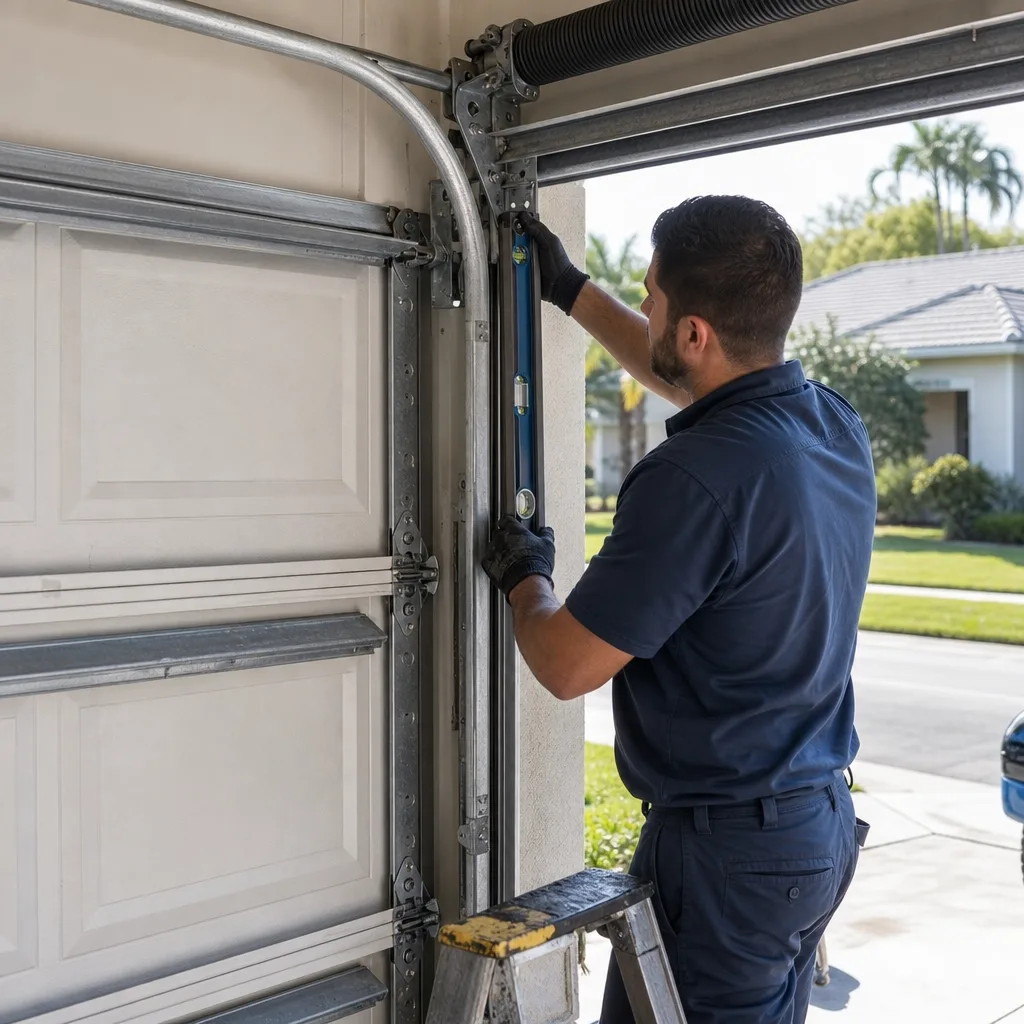
Most of what we need to see in a preliminary diagnosis can be captured in four photos from a phone. When a homeowner sends us clear photos before we arrive, we can tell them over the phone what we’re likely looking at, what it should cost, and whether the door needs to stay shut until we get there. That’s the documentation-first approach we’ve used since 2015, and it means the technician who shows up is already carrying the right parts.
Here’s the photo sequence that gives a technician the most information:
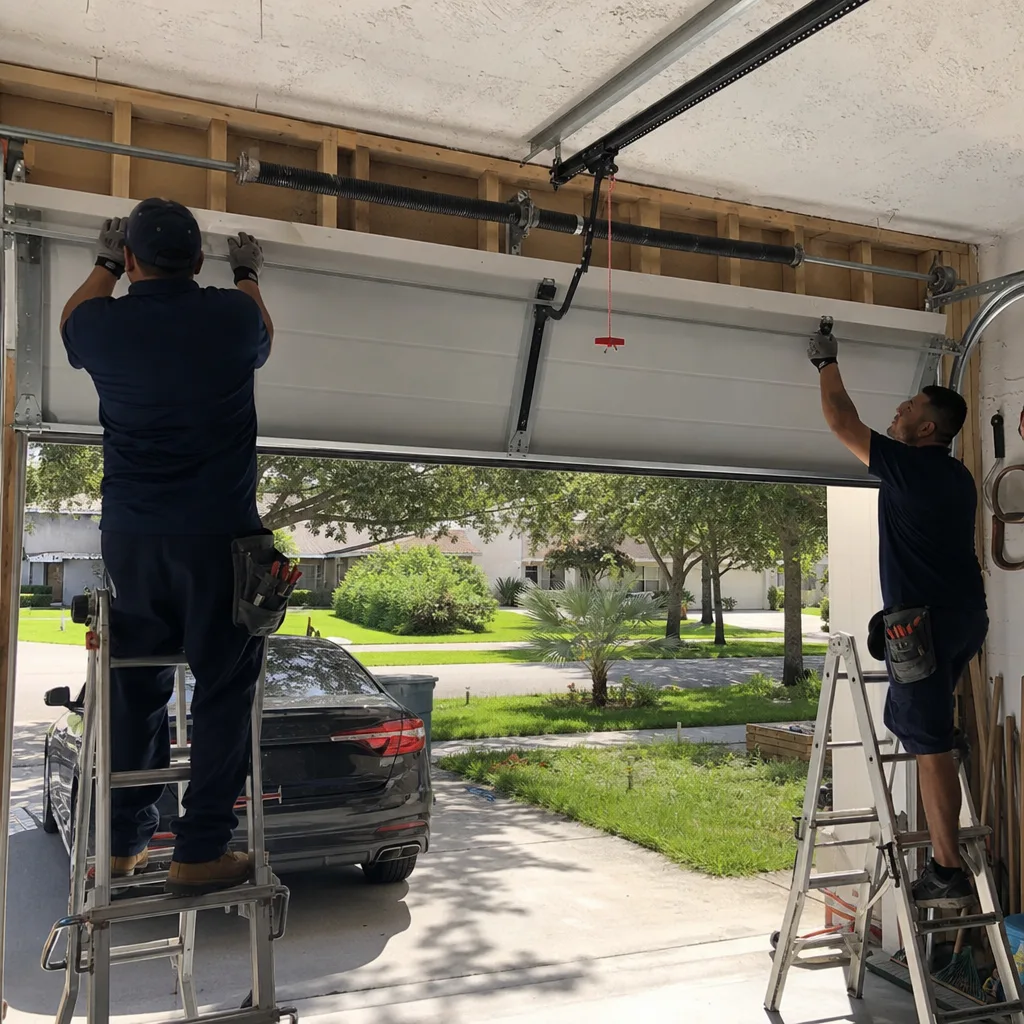
- Photo one: the spring assembly. Stand inside the garage, door closed, and photograph the torsion bar above the middle of the door, including the springs, the cable drums at each end, and the anchor plate in the center. This single photo tells us whether a spring is broken, a cable is off its drum, or a bearing plate is separating.
- Photo two: both lift cables, full length. Move to the side and photograph the cable from the drum down to the bottom bracket on both left and right sides. Fraying shows up in photos as a slightly fuzzy or lighter-colored line, especially with a flash.
- Photo three: the rollers and track on one side. Aim down the gap between the door and track so the roller stems and track brackets are visible. Roller wear and track misalignment are easier to see from this angle than head-on.
- Photo four: the door as it currently sits from outside. Step outside and take a straight-on photo of the closed door, including the ground line on both sides. A crooked door or a gap under one corner is obvious in this shot.
When you call Servo Garage Doors Boynton Beach home, a live person answers, and we’ll ask for these four photos. A named technician reviews them within minutes, and we’ll give you a written, flat scope and price before we schedule the truck. That’s Clause 1 of The Haven Standard: a written price and written scope before any work starts, every time. Not an estimate range. A number.
Warning Signs After a Storm: The Insurance Documentation Sequence
Boynton Beach sits in the path of Atlantic hurricane seasons that run from June through November, and a garage door is the largest opening on the house. When warning signs appear after a storm, the sequence you follow matters for an insurance claim. Here’s the order that protects the claim and keeps you from being caught between an adjuster and a repair bill.
- Photograph everything before touching anything. Use the four-photo sequence above, plus wider shots that show the door in context with the house. Include a timestamp if your phone adds one. If water entered the garage, photograph streaking, standing water, and any damage to stored items before moving them.
- Report the claim before authorizing the repair. Most homeowner policies in Florida require you to report storm-related damage before the work is done, not after. If the door is jammed and can’t be secured, photograph it, then call your carrier to ask about emergency mitigation authorization. Most policies allow immediate securing work even before an adjuster arrives.
- Get the securing work done in writing. Any emergency bracing, board-up, or temporary spring replacement should come with a written, itemized invoice. The insurance adjuster will ask for it. A hand-scrawled number on a business card doesn’t support a claim.
- Don’t accept “storm damage” as a diagnosis without a photograph of the failed part. Clause 4 of The Haven Standard is exactly this: the technician photographs the failed component before quoting a replacement. If the spring broke because it was eleven years old and rusted through, that’s wear and tear, and your policy likely won’t pay for it. If the door has wind-driven impact damage, that’s a covered peril, and the photo evidence makes the distinction clear for the adjuster.
We’ve worked through enough post-storm claims in Boynton Beach to know that the homeowners who get their full claim paid are the ones who can show the adjuster a paper trail: photos before repair, a written scope, a line-item invoice, and photos after the repair. That’s the documentation standard we send home with every visit, whether insurance is involved or not.
What Different Garage Door Noises Actually Mean
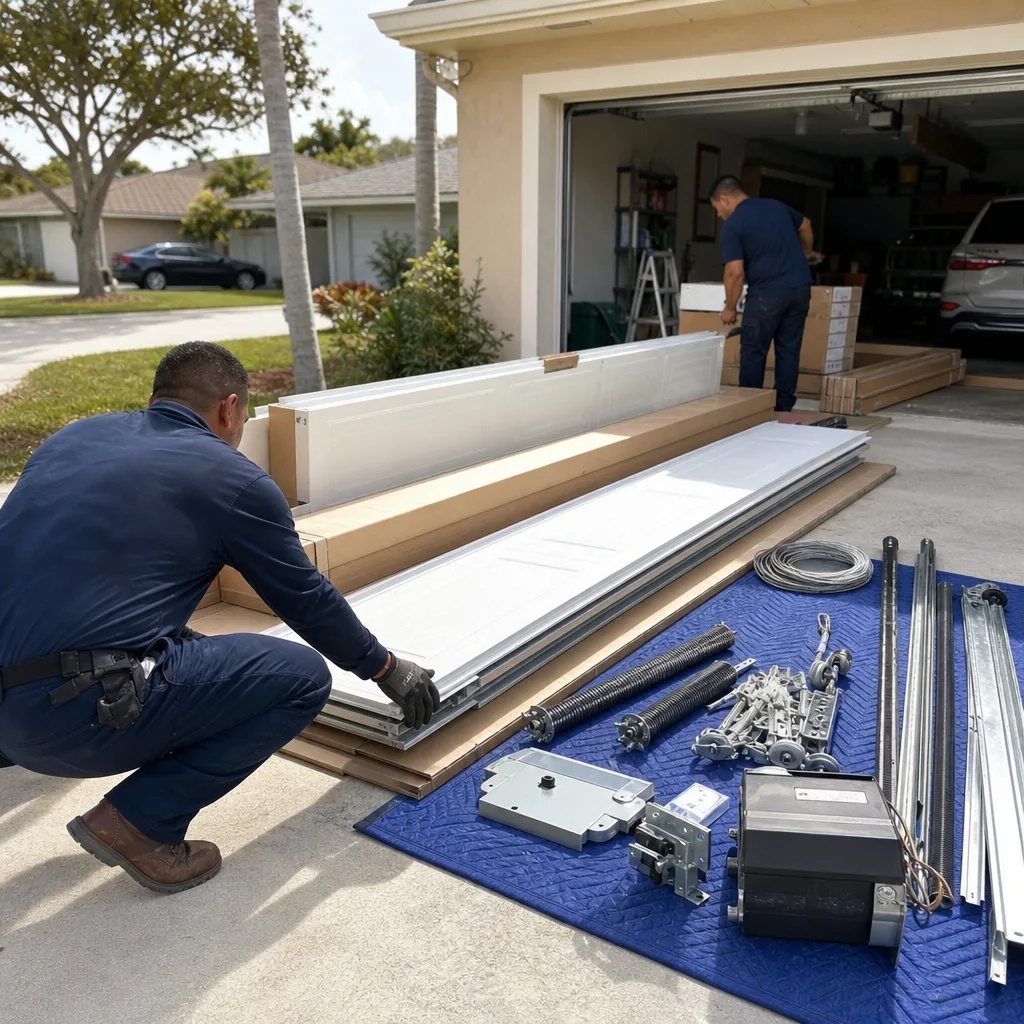
Noise is the most common warning sign homeowners report, and the word “noise” alone tells us almost nothing. Specific sounds point at specific components. Here’s the translation for the sounds we hear described most often in Boynton Beach garages.
- Squealing or squeaking on the way up only: Roller bearings losing lubrication. In coastal air, this often means rust has already started. Lubricating may buy a few weeks. Roller replacement fixes it for years.
- A single loud bang that sounds like something snapped: A torsion spring broke mid-cycle. The door may still open manually, but it’s now working against its full weight. Stop using it and call a Garage Door Repair in Boynton Beach service.
- A rhythmic thumping or bumping during travel: A roller with a flat spot or a track bracket that’s come loose. If the thump matches the distance between track brackets, you’ve found it.
- A scraping sound concentrated in one spot: A track that’s been struck by something. In Boynton Beach garages, we frequently find the culprit is a hurricane panel or a toolbox that slid into the track on a humid afternoon when the slab was sweating.
- A rattle that happens when the opener is running and stops when the door is moving by hand: Loose bolts on the opener rail or a worn trolley carriage. Tighten first, replace second.
One note on lubrication: it’s the most common DIY attempt and the most commonly misapplied. Lubricant belongs on rollers’ bearings and hinge pins, not on the torsion spring. Spraying grease on the spring does nothing for the noise and attracts sand and salt from Boynton Beach’s air, which accelerates corrosion. If you’re going to lubricate, use a silicone or lithium spray, and wipe the springs dry.
What Warning-Sign Repairs Cost in Boynton Beach
Homeowners who research before calling want the price range on the page. Here are the component-level repair ranges we quote in Boynton Beach for the most common warning-sign failures. These include the part and labor, and every job gets a flat, written price confirmed before any work starts. The final number depends on your door’s weight, the hardware already on the wall, and which component is actually at fault, but these ranges hold for the large majority of residential doors in this market.
| Repair | Typical Range in Boynton Beach | When It’s Needed |
|---|---|---|
| Torsion spring replacement (one spring) | $180 – $280 | Door hesitates going up, visible gap in coil, door heavy by hand |
| Torsion spring replacement (both springs) | $280 – $480 | One spring failed; the other is same age and will follow within months |
| Roller replacement (full set) | $95 – $180 | Squealing, grinding, door shudders, rust-seized rollers |
| Track realignment or bracket repair | $110 – $225 | Door jerks in one spot, scraping sound, visible track bow |
| Cable replacement (both cables) | $120 – $200 | Frayed or slack cables, always paired with spring inspection |
| Bottom seal replacement | $65 – $120 | Water ingress, daylight under door, false sensor trips |
| Opener drive gear or logic board | $150 – $320 | Opener runs but door barely moves, confirmed door balanced by hand |
| Complete opener replacement (installed) | $350 – $600 | Motors over 12-15 years old, failed logic board on obsolete model |
These ranges are what we quote on the phone once we’ve seen the four diagnostic photos. The number we give you is the number on the invoice, because Clause 1 of The Haven Standard says the written price and written scope come before any work starts. If you’re comparing another company’s estimate, bring us the paperwork and we’ll give you a free second opinion on the written estimate. No coupon, no code, no asterisk.
For a full replacement, see our Garage Door Installation in Boynton Beach page, where every door is quoted the same way: a single written price for the door, hardware, labor, haul-away, and a documented photo record when the installer leaves.
Common Mistakes to Avoid
- Lubricating a broken spring. Lubricant will not close a gap in a spring coil. A homeowner who sprays a broken torsion spring has just made the break point slipperier and done nothing to restore counterbalance. The door is still dangerous.
- Replacing the opener when the door is heavy. If the door is hard to lift by hand, the opener is not the problem. A new opener bolted to a door with a dead spring will burn through its gear in six to nine months. Test the door by hand first, every time.
- Continuing to use the door after one cable fails. A single snapped cable means the remaining cable is now carrying the full weight of that side. The next failure is the corner of the door dropping, which damages panels, track, and whatever is underneath.
- Accepting an over-the-phone price without a written scope. In Boynton Beach, a “price” given before anyone looked at the door is a sales teaser, not a quote. A written price tied to a written scope is the only number that means anything, and it’s the only thing we issue.
- Waiting out a noisy spring. A torsion spring that’s making noise and showing reduced coil spacing will not gradually fix itself. It will snap at whatever moment it chooses, and that moment is never convenient. The cost of replacing one spring now is less than the cost of a dropped door later.
When to Call a Professional
Call a professional when you see a gap in the torsion spring, fraying on a lift cable, a cracking bottom bracket, or a door that drops when released from the opener. If you’re unsure where to start, read How to Hire a Garage Door Contractor in Boynton Beach: A Step-by-Step Guide first. These are stop-use conditions, and no amount of research replaces hands-on measurement of spring wire diameter, cable condition, and track alignment. Call a professional also when the door is making a sound you can’t place, because the difference between a $120 roller set and a $500 opener replacement is often something a trained eye spots in ninety seconds. Servo Garage Doors Boynton Beach offers free estimates to homeowners in Boynton Beach and surrounding communities. Call (754) 227-2243 and a live person answers, 24 hours a day, including holidays.
Frequently Asked Questions
The most common warning sign we see in Boynton Beach is a door that hesitates or pauses partway up, which almost always points to a torsion spring losing tension. Coastal humidity accelerates spring corrosion, and springs in this area typically last eight to ten years before showing visible coil separation. Expect to pay $180 to $280 to replace one spring, or $280 to $480 for both, and the price is quoted in writing before any work starts. Call (754) 227-2243 and we’ll walk through what you’re seeing.
A single torsion spring replacement in Boynton Beach typically runs $180 to $280 including the spring and labor, and a paired spring replacement runs $280 to $480. The range depends on the door’s weight and the spring’s wire diameter, which determines the spring’s lifecycle and cost. We give a flat, written price after reviewing photos of the spring assembly, and that number doesn’t change once we arrive. Call (754) 227-2243 for an exact quote, before any work is scheduled.
Yes, for safety-critical repairs like broken springs, frayed cables, and dropped doors, we dispatch same day in Boynton Beach, and emergency calls are answered by a live person 24/7, including holidays. We send a named technician and an on-the-way text, not a four-hour callback window. For performance repairs like roller replacement and seal replacement, we schedule the next available visit and confirm the price in writing before the truck is dispatched.
No, the price doesn’t change. We review your diagnostic photos before dispatch, confirm the scope in writing, and quote a flat price. If something different is found on site, the technician photographs it, explains what changed, and gets written approval on a new scope before any additional work begins. Clause 1 of The Haven Standard is a written price and written scope before work starts, and it applies to every job, including change orders.
Yes, our trucks carry torsion springs in the most common wire diameters for residential doors in Boynton Beach, plus full roller sets, cables, bottom seals, and common opener drive gears for LiftMaster, Chamberlain, and Genie models. Because we review your photos before dispatch, the technician typically arrives with the right parts and completes the repair in one visit. The photo-first practice is why we ask for the four diagnostic shots when you call.
Any visible gap in the torsion spring, fraying on a lift cable, a cracking bottom bracket, or a door that drops when released from the opener is an urgent stop-use condition. The door is holding weight on failed components and can drop without warning. Performance signs like squealing rollers, a worn bottom seal, or a slightly crooked door can be scheduled, but should still be addressed within weeks, not months. When in doubt, call (754) 227-2243 and describe what you’re seeing; we’ll tell you over the phone whether to keep using the door.
The Bottom Line
A garage door warning sign in Boynton Beach is almost always traceable to a specific component, and knowing which one saves you money and keeps your family safe. Hesitation on the way up points at the torsion spring. Squealing points at the rollers. Water under the door points at the bottom seal. Grinding that comes and goes with the weather points at coastal rust, not a dying opener. Photograph what you see before you call, get the price in writing before you authorize work, and insist on a photo record of what was found and what was done. That discipline is what turns a frustrating problem into a solved one cleanly, and it’s the standard we hold ourselves to on every job in Boynton Beach. For more guides & resources, visit our blog.
Written by Marcus Deller, Owner at Servo Garage Doors Boynton Beach, serving Boynton Beach since 2015.